
-
Educator perceptions on the benefits and challenges of loose parts play in the outdoor environments of childcare centres
Abstract It is important to consider physical activity and movement in early life to ensure children establish and maintain healthy physical activity patterns. Recent evidence… -
Becoming “physically educated” to improve health and wellbeing: the meanings of “Education” and “Physical” in Physical Education
Abstract In this contribution, we explained the meanings of “Education” and “Physical” in Physical Education (PE) in the international framework, as there is a global… -
A clash of fundamental assumptions: Can/should we measure physical literacy?
Background The concept of physical literacy (PL) is gaining popularity within public health and physical education circles. However, little is known about the relationship between… -
A four-week fundamental motor skill intervention improves motor skills in eight to 10-year-old Irish primary school children
Aim To determine if a four-week fundamental motor skills intervention improves fundamental motor skills in Irish school children. Methods 100 Primary School boys (n =… -
Prevalence and Relationships among Physical Activity Policy, Environment, and Practices in Licensed Childcare Centers from a Manager and Staff Perspective
Abstract Physical activity (PA) is critical to early childhood health and development, and childcare is a key setting for establishing physically active play. In British… -
Implementing Appetite to Play at scale in British Columbia: Evaluation of a Capacity-Building Intervention to Promote Physical Activity in the Early Years
Abstract Childcare is a critical target for promoting children’s physical activity (PA) and physical literacy (PL). With emerging evidence about the efficacy of policy and… -
Validity and Reliability of Self-Perception-Based Submaximal Fitness Tests in Young Adult Females: An Educational Perspective
In physical activity, testing procedures generally require maximal efforts. They are not always administrable or appropriate (e.g., with beginners, elderly, or in school); therefore, alternative… -
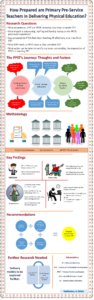
How prepared are postgraduate primary pre-service teachers in delivering physical education as they approach their NQT Year?
Abstract Background Each year, primary pre-service teachers (PPST’s) graduate from initial teacher education (ITE) and transition into the primary workplace as newly qualified teachers (NQTs).… -
The effect of a physical literacy and differential learning program in motor, technical and tactical basketball skills
Abstract The aim of this study was to examine the effect of a physical literacy and differential learning program in motor, technical and tactical basketball… -
Relationship between perceived physical literacy and physical activity levels among Hong Kong adolescents
Abstract This study explores the relationship between the perceived physical literacy (PL) and physical activity (PA) levels of Hong Kong adolescents by using a cross-sectional… -
Sport England – Uniting The Movement
Overview This strategy is published in extraordinary times. Every one of us has seen our lives changed in some way by the coronavirus (Covid-19) pandemic,… -
Well-Being, Obesity and Motricity Observatory in Childhood and Youth (WOMO): A Study Protocol
Background Childhood obesity is one of the greatest public health problems facing advanced societies, and Spain is one of the countries with the highest incidence.…