


We’ve all been there: standing pitch-side, watching a 5v5 passing activity dissolve into a frustrated cluster in the centre circle. Students were bumping into each other, the ball kept turning over, and the intended tactical learning vanished into chaos.
I used to rely on generic fixes such as “Spread out!”. I had planned for different abilities (that’s Adaptive Teaching, right?), but in that moment of classroom chaos, my teaching felt neither helpful nor effective. My instruction was falling short, and the students were hitting a wall.
It took a conscious decision to move beyond that ‘mile wide and an inch deep’ pitfall. This shift is the difference between simple differentiation and the power of Adaptive Teaching, Responsive Teaching, and Task-Focused Feedback these frameworks that ensure that every student has a clear path for progress in both skill and cognition.
Understanding Adaptive and Responsive Teaching
Adaptive Teaching involves proactive planning to address potential barriers to learning before they arise. This approach emphasizes understanding students’ individual needs and adjusting teaching methods accordingly.
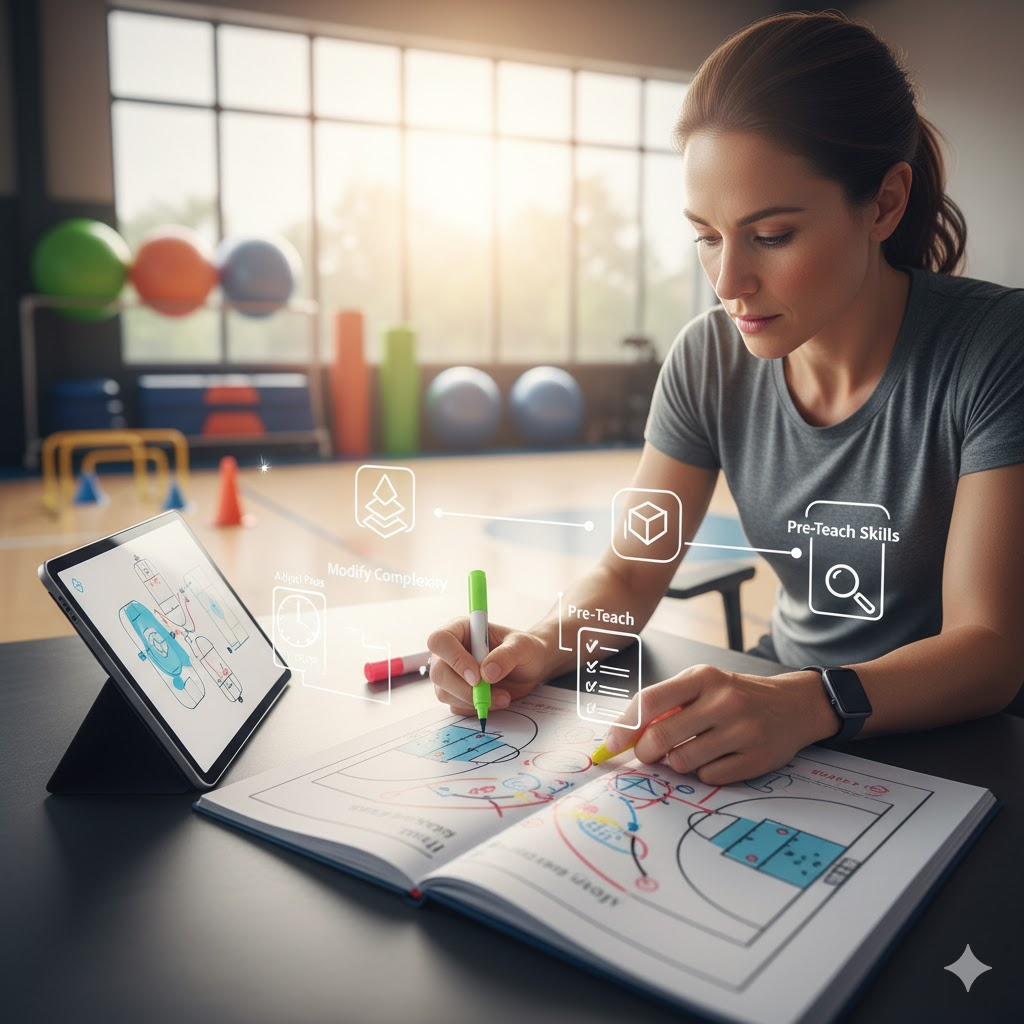
For instance, teachers might:
- Modify task complexity by changing the rules of a game (e.g., moving from 5v5 basketball to 3v3 with roles to increase touches).
- Adjust the pace or provide pre-teaching sessions for complex motor skills (e.g., isolating a small group to teach the correct grip and hand position for a tennis serve before the main lesson).
Responsive Teaching, on the other hand, is characterised by real-time adjustments based on ongoing observation, scanning, assessment and student feedback. This approach requires educators to be attuned to students’ immediate needs and to be flexible during instruction to address those needs promptly, often employing strategies derived from previous formative assessment (Wiliam, 2011).
In P.E this often involves:
- Noticing a Barrier and Pivoting: The teacher observes that students in a passing activity are constantly clustered (the intended tactical outcome is not emerging). The teacher’s responsive action is to pause the group and guide them to the solution through dialogue:
- Teacher: “I notice some of us are struggling to find space. How can we find space?”
- Student Response: Students discuss, then suggest: “We need to check our shoulder and then move into that space.”
- Teacher/Task-Focused Reinforcement: “Exactly! That movement—checking your shoulder—is the specific action that will be really impactful on your game.”
This use of a precise question is the responsive tool that moves the learning from simple execution to strategic, deeper thinking about movement and decision-making.
While both aim to support diverse learners, Adaptive Teaching prepares the pitch; Responsive Teaching fine-tunes the play. They differ in timing, with Adaptive being about foresight and preparation, and Responsive about agility and intervention during the moment.
The Power of Task-Focused Feedback
Feedback is a critical component of the learning process, but its effectiveness lies in its focus. Task-Focused Feedback is specific, actionable, and directly related to the task at hand – it addresses the gap between current performance and the intended success criteria.
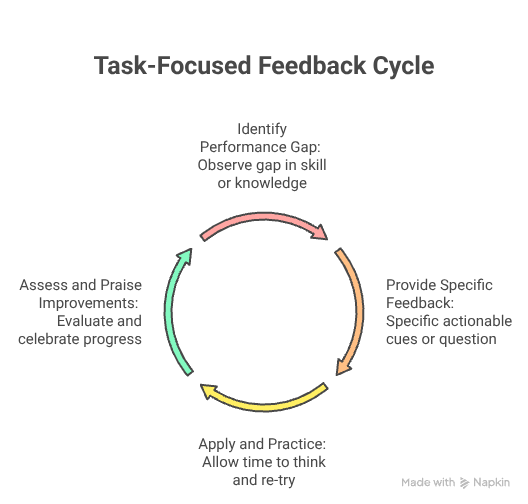
We can think of TFF as a continuous four-step cycle that both corrects errors and enhances student ownership:
- Identify Performance/ Learning Gap: The teacher observes a gap in a student’s skill or tactical knowledge. This diagnosis is the starting point for effective intervention.
- Provide Specific Feedback: This is the moment to deliver specific, actionable cues (e.g., “Follow-through low”) or use an inquiry question (as seen in the Responsive Teaching example). This precision is a powerful way to gain student buy-in and gauge their current understanding.
- Apply and Practice: The student is allowed time to think and re-try the action. This ensures the student, not the teacher, owns the improvement process.
- Assess and Praise Improvements: The teacher evaluates and celebrates progress seen. This reinforces correct technique and motivates the student toward mastery.
According to research highlighted in Teaching WalkThrus by Sherrington and Caviglioli, effective feedback must be clear, concise, and directly tied to the learning objectives. It should guide students on how to improve their performance, rather than merely evaluating their current level of achievement. In addition, PE specific research suggests using the mastery TARGET structures (task, authority, recognition, grouping, evaluation and time) to optimise student motivation and progress.
Integrating Adaptive, Responsive, and Task-Focused Feedback
The true power lies in the synergy between these three concepts, creating a dynamic feedback loop that drives continuous improvement. To truly re-shape your teaching, think of this framework as your operational checklist for mastery. It helps shift your focus from simply correcting errors to strategically cultivating independence and deeper thinking in every student.
P.E. educators who integrate this holistic approach:
- Plan Proactively (Adaptive): They anticipate common errors and prepare differentiated strategies before the lesson starts.
- Monitor Agility (Responsive): They use real-time observation and formative assessment to identify moments where instruction needs to pivot, often by challenging students to think and problem-solve.
- Close the Gap (Task-Focused Feedback): They execute the four-step TFF cycle to provide precise, actionable feedback. This method not only helps students immediately correct their performance but also acts as a powerful tool to gauge their current knowledge and secure their active buy-in to the solution.
This synergy ensures that all students receive the specific support and challenge they need to succeed, regardless of their starting point, thereby fostering an inclusive and high-challenge learning environment.
Conclusion
In conclusion, the combination of Adaptive and Responsive Teaching strategies, coupled with the precision of Task-Focused Feedback, offers a comprehensive framework for enhancing holistic learning in Physical Education. By committing to proactive planning and real-time agility, and tying both to clear communication, P.E. educators move beyond mere differentiation. They create a learning culture where every student has a clear roadmap to begin to close the gap—in skill, cognition, and character.
Your Challenge:
The next time you are observing an activity, try to move past the simple correction. Instead, pause, ask an inquiry question that targets the tactical problem, and allow your students 30 seconds to discuss and implement a solution.
Which single activity will you try this strategy for tomorrow?
About the author
Nathan Joyce is Head of Physical Education at Lockyer’s Middle School, working in a unique Years 5–8 setting that offers the opportunity to shape a PE experience across a distinctive phase of education. He has completed his NPQ in Leading Teaching, which has enhanced his ability to lead research-informed, sustainable change within his school and across a wider trust.
References:
Sherrington, T., & Caviglioli, O. (2020). Teaching WalkThrus: Five-step guides to instructional coaching. John Catt Educational Ltd.
Education Endowment Foundation. (2020). Moving from ‘differentiation’ to ‘adaptive teaching’. https://educationendowmentfoundation.org.uk/news/moving-from-differentiation-to-adaptive-teaching
Quigley, A. (2021). Adaptive Teaching: Scaffolds, Scale, Structure and Style. https://alexquigley.co.uk/adaptive-teaching-scaffolds-scale-structure-and-style/
Wiliam, D. (2011). Embedded Formative Assessment. Solution Tree.
Responses