


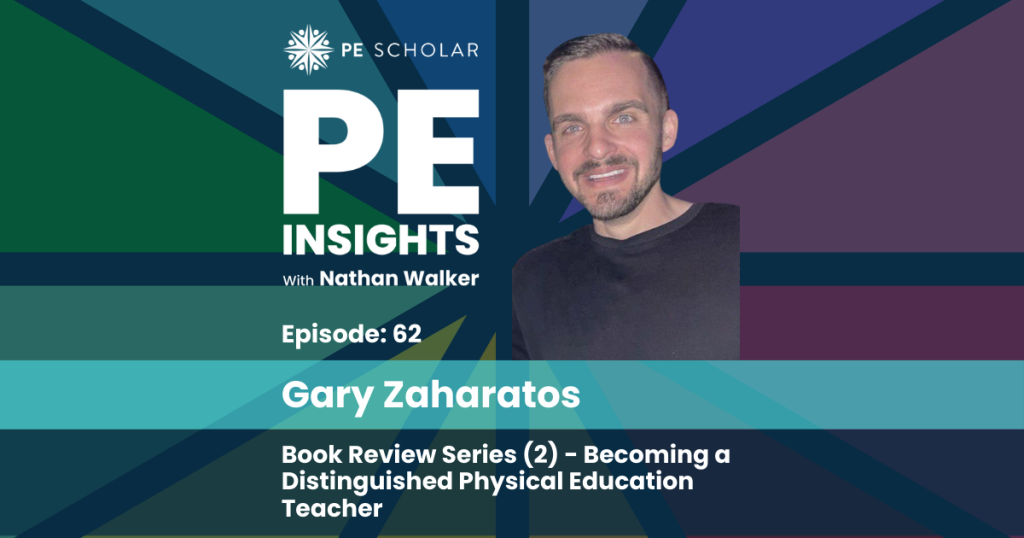
Gary Zaharatos, an instructional coach for PE teachers in Denver Public Schools, joins the podcast to share his expertise in instructional design and creating high-quality PE programmes, as detailed in his book, Becoming a Distinguished PE Teacher. Gary’s unique role focuses on providing targeted, opt-in support to approximately 50 PE teachers.
The Role of an Instructional Coach
Gary’s primary responsibility is ensuring that PE is recognised and delivered as a high-quality academic subject.
- Coaching Scope: He coaches PE teachers on high-quality delivery but also works with “building leaders” (school principals and administrators) to ensure they are “calibrated” on what effective PE looks like.
- The Coaching Cycle: His support involves a structured cycle over four to five weeks:
- Goal Setting: Meeting with the teacher to set a goal around the learning environment, communication of expectations, or assessment.
- Observation and Planning: Observing lessons and collaborating on lesson plans.
- Peer Observation: Taking groups of teachers to observe peers in other schools. This is highlighted as a highly beneficial practice for overcoming the isolation often experienced by PE teachers.
- Feedback and Review: Periodically meeting to check progress, offer feedback, and refine the plan.
The genesis of his book stemmed from writing down instructional feedback for a teacher who was struggling with disruptive student behaviours, realising he was having the “similar conversations over and over and over again”.
Establishing High-Quality Learning Environments
Gary stresses that preventative measures are key to managing behaviour. If students want to be in the gym because it is “safe and welcoming and fun,” the teacher has won “half of the battle”.
Routines and Expectations
A core strategy involves scripting clear routines and expectations for students.
- Matching Environments: Gary recommends aligning the physical arrangement of the gym with the classroom setup (e.g. using colour-coded rows or matching carpet squares). This helps students view PE as an extension of their learning environment, reinforcing focus and compliance.
- Scripting Transitions: Routines, such as retrieving equipment, must be meticulously scripted, detailing exactly:
- What students should do with their bodies (e.g. walk, voice level zero).
- Who should go get the equipment (e.g. the blue row).
- What they should do after securing the item (e.g. find a spot, eyes on the teacher).
- Accountability: Teachers should use the gradual release method (sending one row at a time) and use peers (thumbs up/down feedback) to hold each other accountable for following the routines.
Outdated Practices to Remove
To achieve an equitable and high-quality environment, Gary insists that PE must eliminate outdated practices:
- Captains Picking Teams: This creates an environment where students feel unsafe and can be damaging long-term. Grouping should be done “with intention”.
- Overemphasis on Competition: While competition is not inherently bad, cooperative activities are also vital.
- Arbitrary Assessment: Grading students on non-learning metrics such as wearing the correct kit (sneakers/shorts) or perceived effort must stop. Assessment must strictly align with progress toward learning objectives and standards.
The Power of Content and Language Objectives (CLOs)
A significant portion of Gary’s instructional design focuses on the use of Content and Language Objectives (CLOs) to ensure PE is taken seriously and achieves cognitive rigour.
Purpose of CLOs
CLOs are crucial for:
- Holistic Assessment: Moving beyond just assessing physical progress, incorporating cognitive development.
- Elevating Status: Proving to administrators that PE involves more than just “breathe heavy and sweat,” thus advocating for the subject’s place in the curriculum.
- Articulating Learning: Providing students with opportunities to articulate what they are learning using language similar to what they use in the classroom.
Constructing an Effective CLO (Example: Striking for Accuracy)
The process of constructing a CLO is structured and begins with identifying the learning goal:
- Ideal Student Response (ISR): Determine what a student (aged seven, in this example) should be able to say they learned by the end of the lesson (e.g. they know how to strike a ball with an implement and direct it with intention).
- Language Function: Analyse the ISR to select an appropriate language function (e.g. describe, compare, justify, predict). For “striking for accuracy,” the function chosen is “describe”.
- Writing the CLO: The formal CLO might be: “Students will be able to physically demonstrate and verbally describe how to strike a ball with accuracy”.
- Student-Friendly Language: This is translated into three key questions to be used throughout the lesson:
- Beginning Question (Prior Knowledge): Ask students to describe the last time they struck an object (e.g. what did it sound like/feel like?).
- Middle Question (Progress Check): Ask students to describe what their body looks like when they hit for accuracy (focusing on cues like shoulder position or feet placement).
- End Question (Transfer): Ask students to describe a feeling they had (joy, frustration) during the lesson and how they might apply that learning to a different context (e.g. angles/force in Maths or emotional regulation).
By using this approach, Gary ensures that students are actively thinking about and articulating their movements, which he believes positively impacts their physical performance.
Quickfire Questions and Professional Insight
Gary’s final rapid responses reinforced his instructional priorities:
| Category | Response Details |
| Non-Negotiables | PE must be safe, welcoming, rigorous (physically and cognitively), and fun. |
| Mantra | It must be more than movement; PE must include meaningful learning. |
| Removal from PE | Outdated assessment practices (grading on kit or effort). |
| Advice for New Teachers | Build capital with the principal and colleagues (do things for the school and community). Do not complain about your schedule in the first year; choose your battles wisely. |
| One Word for PE | Joyful. |
Conclusion
Gary is currently expanding his book with new chapters on social media influence and how to implement change in challenging, resistant environments.
About the Guest
This episode is a conversation with Gary Zaharatos, an instructional coach for PE teachers in Denvor, USA.
Listen
To listen to the full episode please follow these links to Spotify or Apple podcasts.

Responses