


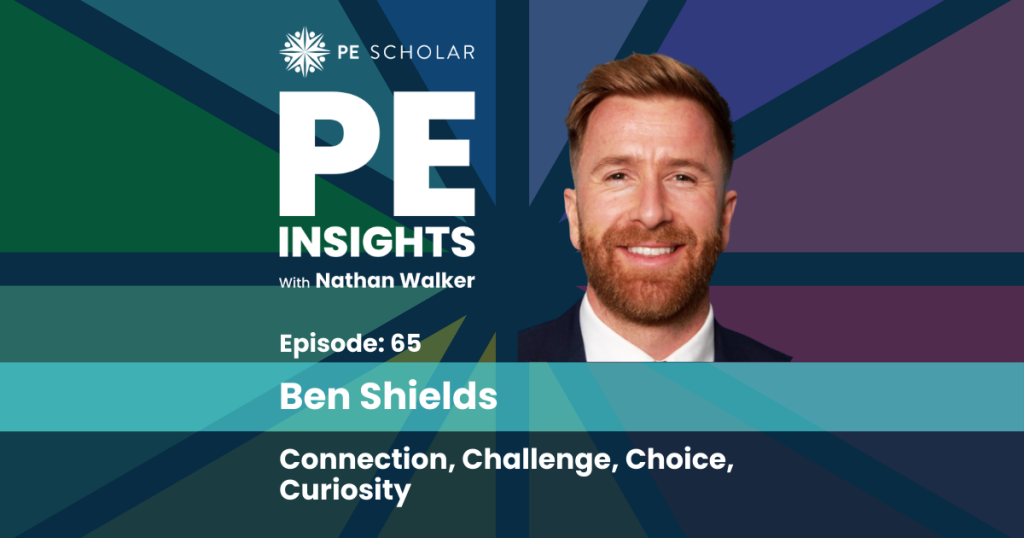
Ben Shields, Head of Primary PE in Brisbane, Australia, shares his experience navigating the challenging terrain of Health and Physical Education (HPE) and implementing the holistic assessment framework, ‘Know-Show-Grow’.
The Complexities of Health and Physical Education (HPE)
Ben operates within the Australian HPE curriculum, which mandates a fusion of theoretical health topics and physical activity.
- Curriculum Scope: The curriculum includes components typically known in the UK as PSHE, such as emotional regulation (zones of regulation), nutrition, online safety and puberty concepts.
- Time Challenge: This integrated approach inevitably tightens the available time for pure movement and physical activity.
- Creative Blending: Ben and his team must find creative ways to blend the theory with movement. For instance, teaching emotional regulation through the practical application of Ultimate Frisbee, where the main focus is how students manage winning and losing.
- Contextual Delivery: The delivery is often adapted due to facilities and competition with the senior school for space, leading to unique activities such as life-saving, water polo, tchoukball, and parkour.
The ‘Know Show Grow’ Assessment Framework
Ben’s department adpopted the ‘Know Show Grow‘ framework as a backwards design tool to ensure a holistic approach to assessment and feedback, moving away from rigid, traditional sport blocks. This framework provides students with multiple opportunities to demonstrate success beyond just physical skill.
| Domain | Focus |
| Know | Cognitive understanding (e.g. tactics, strategies, rules). |
| Show | Physical skills and capabilities (the demonstration of movement competence). |
| Grow | Affective and social skills (e.g. resilience, responsibility, kindness, emotional regulation). |
Implementation Details:
- Planning Focus: The framework ensures that planning prioritises a holistic outcome. For instance, a frisbee unit might have Grow (emotional regulation and social connection) as the primary focus, while T-ball activities might focus more on Know and Show (creating rules, skill application).
- Feedback Mechanism: The school, being a Primary Years Programme (PYP) school, does not issue traditional annual reports. Instead, they use continuous feedback pieces throughout the term.
- Practical Examples: To assess progress in Show and Know domains, students might conduct a peer analysis during a movement space unit, drawing the movement patterns of an opponent on a pitch and discussing their strategy. For the Grow domain, teachers look for moments where the subject, which places students outside their comfort zone like no other, challenges their social skills.
- Student Voice: The department actively uses student voice to choose activities and tailor the curriculum, although securing facilities remains a challenge.
Sport for Life: Non-Assessed Activity
To counterbalance the pressure of the core HPE curriculum, Ben implemented ‘Sport for Life’, an extra, non-assessed physical activity session run over six-week blocks.
- Pupil Choice: Students choose their activity from a diverse list (e.g. well-being walk, baseball, table tennis).
- Purpose: This provides an additional opportunity for physical activity time driven purely by pupil choice, aligning with the PYP approach.
Parent Communication and Professional Insight
Ben, who holds three roles (PE Lead, Sport Lead, and Co-Curricular Lead), maintains high visibility with parents.
- Positive Perception: Feedback from parents has been generally positive, appreciating the diversity of the offer and the separation of competitive sport (which is available in co-curricular) from the holistic curriculum focus.
- Celebrating Movement: Ben highlights the power of PE as a subject that challenges students and forces them to confront moments of vulnerability, which feeds into the Grow domain.
Quickfire Questions and Professional Insight
Ben’s responses reflect his commitment to playful and challenging learning:
| Category | Response Details |
| Non-Negotiables | The Four Cs: Choice, Challenge, Connection, and Curiosity. At least two must be in every lesson. |
| Mantra | “If you’re going to miss the bus, you got to miss it running.” This translates to encouraging students to commit fully and apply a growth mindset to all challenges. |
| Removal from PE | Fitness testing without context. The concept of forcing large-sided sports (e.g. 11-a-side football) onto young children (e.g. 9- or 10-year-olds) who are not ready for it. |
| Advice for New Teachers | “Be a Blackbird”—steal ideas from great teachers, listen to podcasts, watch lessons in other subjects, and adapt them to your specific context. |
| One Word for PE | Belonging. This links back to safety, connection, and ensuring every student finds a place for success. |
Conclusion
Ben advocates for modifying activities heavily to ensure they are appropriate for the students in front of the teacher, citing that research on small-sided games shows increased touches, creativity, and development.
About the Guest
This episode is a conversation with Ben Shields, Head of Primary PE in Brisbane, Australia.
Listen
To listen to the full episode please follow these links to Spotify or Apple podcasts.

Responses