


Educational Journey and Context in Bangkok
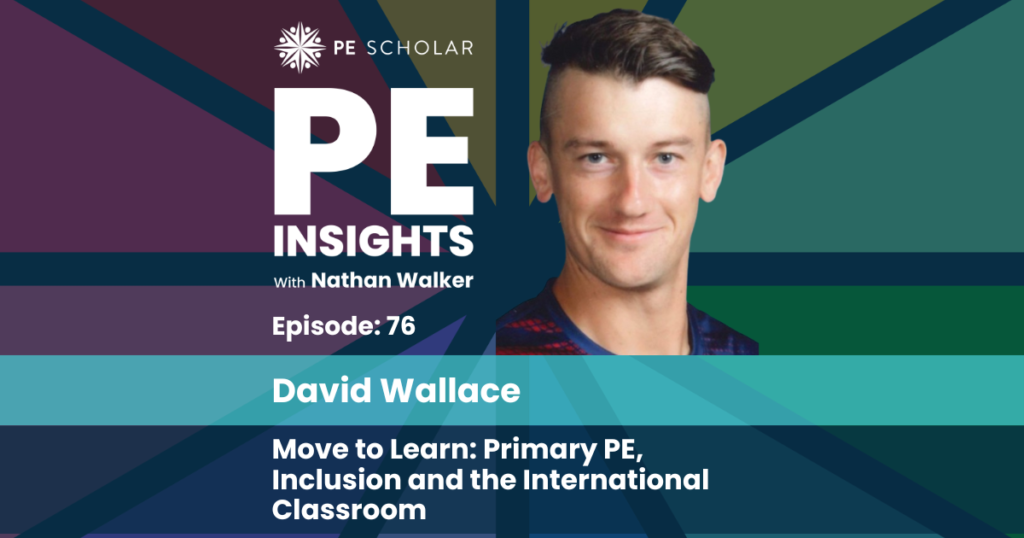
The episode introduces David Wallace, who joins the conversation from Bangkok, Thailand, where he works teaching Junior PE at Schrod Riverside.
David’s educational foundation began in the UK, where he trained as a secondary school PE teacher at the University of Cumbria, completing a three-year QTS degree. Following his training, David taught for one year in the UK at a free school in Burnley. However, his career trajectory changed rapidly. By October half term of that first year, he visited Thailand and secured a job at a primary school in Bangkok.
This transition was initially described as “quite a shock”. David explicitly stated that he had not trained as a primary school PE teacher, had little interaction with children of that age and was unsure how to communicate with them effectively. He was mentored by a key figure in his career, Alistair DS, who “took me under his wing”. This mentorship proved pivotal and David has since dedicated his career to the primary PE space. His subsequent roles included serving as the Head of Junior School PE in Hong Kong before returning to Bangkok, where he teaches junior PE. David affirmed that if asked about his passion, the answer is “primary school PE,” as he loves the enthusiasm of the junior school students and the opportunity to shape those initial experiences.
Core Philosophy: Movement and Holistic Balance
David noted that the field of physical education has “changed so much” during his teaching tenure, with the social, emotional and cognitive development of children moving into the forefront alongside the traditional physical aspects. He uses and reflects upon several contemporary models, including “head, heart, hands,” “No, Show, Grow,” and the concept of “move to learn and learn to move” when crafting learning objectives.
Despite the importance of these holistic domains, David believes that the physical component remains the “core component” of the subject. He feels a responsibility to ensure that lessons “do primarily revolve around movement” because of the unique role PE plays in the school environment. For some children, PE is the only space available in their lives where they move.
David acknowledged that balancing these multiple learning components correctly is a persistent challenge, even admitting he has been “guilty” of occasionally looking back at a lesson and questioning how much actual movement occurred.
Feedback and Reflective Practice
To address the challenge of balancing learning objectives across domains, David shared a personal reflective strategy focused on feedback. When moving around the class and speaking to students, he maintains a mental tally list to track the focus of his feedback. This ensures he distributes his attention equally across different learning objectives—whether physical, social (like sharing or resolving conflict), or cognitive. David explained that if a teacher only ever provides feedback on physical elements, they inadvertently send the message that only physical proficiency is important, potentially diminishing the value of the other domains. By consciously varying feedback, he aims to convey that the “whole learning is important”.
Grouping Strategies and Inclusivity
David devoted a significant portion of the conversation to discussing inclusivity and grouping strategies, citing a specific critical moment that reshaped his teaching practice.
The Imperative for Change
David reflected on the traditional method of team selection, often involving two captains choosing players, which inevitably left one child picked last. He described this outcome as feeling “socially ostracised and almost publicly mocked,” an experience he recognised no one wants in a lesson.
Despite recognising this, David admitted that until recently, his typical grouping method remained “find a partner”. This changed when a new, shy student, who had not yet made many friends, was asked to find a partner. David witnessed the child “shrink to sort of the back” and be left alone. This moment “struck a chord,” forcing David to reflect on how he would feel if one of his own children was subjected to that experience. This parental reflection reinforced the need for intentional grouping that prioritises human experience over convenience.
Practical Strategies and Tools
David emphasised that intentional grouping serves two primary purposes: preventing social exclusion and ensuring that children work with different peers regularly.
- Simple Conversation Starters: David uses straightforward grouping methods, such as asking students to find partners whose birthdays are in the same or different months, or who wear the same color shoes. These activities also act as “conversation starters”.
- The Team Shake App: David highly recommends using the Team Shake app (non-commissioned). This app allows teachers to easily upload class lists, specify incompatible students and rate students on ability. This feature is critical for creating genuinely mixed-ability groups, ensuring balance.
- Overcoming Pace Concerns: David acknowledged that teachers often avoid these strategies because they can “slow the pace of the lesson down slightly”. However, he strongly asserted that the benefit of ensuring every child feels included “outweighs the cost” of the extra minute or so needed for grouping. The positive outcome of his reformed practice was validated when the young girl previously excluded approached him with a quiet smile and simply said, “thanks Mr. Wallace,” affirming that the change was “worth it”.
International Teaching Landscape
As an experienced international educator, David shared insights into the realities of teaching overseas.
Advantages of a UK Qualification
David noted that UK-trained teachers who hold QTS are highly fortunate because their skill set, particularly teaching the English National Curriculum, is in high demand globally. The majority of international schools operate using either the English National Curriculum or the IB curriculum. He considers the UK qualification a “global passport” that opens doors to amazing experiences.
Quality, Progression and Freedom
- High Standards: David observed that the quality of international schools has improved significantly, noting that the hiring processes are now “very rigorous,” often involving multiple interviews and sending lesson videos. Consequently, the quality of teachers and professional development (PD) in these schools is high.
- Facilities: Many international schools offer “incredible” facilities.
- Career Progression: While his initial motivation at age 22 was “adventure,” David quickly discovered that constantly moving every two years hinders career progression, emphasising that international teaching remains a professional career.
- Curriculum Adaptation: David highlighted a key professional benefit: although they teach the English National Curriculum, they are not strictly bound to it. International schools grant teachers the freedom to adapt the curriculum based on the specific needs and context of their diverse student body.
- Accreditation: He advised prospective teachers to check a school’s accreditation status, noting that many reputable international schools are inspected and graded by bodies similar to Offstead, such as BSO (British Schools Overseas).
Master’s Research on the Online Community
David reflected on his Master’s journey, which involved re-engaging with academic research and focused specifically on the online PE teacher community.
The Rise and Fall of Twitter/X
David found that platforms like Twitter (before rebranding to X) were a “lifeline” during his time as a lone PE teacher, providing access to a huge network of colleagues to share resources and ideas. This online network was especially invaluable during the COVID pandemic.
However, the tone of the platform shifted. David observed that it became a “toxic place” where political content and hate posts overshadowed teaching practice, forcing teachers to “sift through a lot of unpleasant” material to find useful ideas. Due to the difficulty in accessing the desired content, David and many others chose to leave.
New Digital Spaces and Professional Development
David’s research, which primarily involved interviewing international teachers, suggested that educators migrated to other platforms:
- Instagram was identified as the number one space where people moved to share content.
- LinkedIn was the second most popular destination, although David noted it functions as a “much more of a formal professional space”.
David strongly advocated for the continued use of online professional development spaces. He noted that teachers’ professional outlook is often influenced by the five people they interact with most, meaning external online connections are vital to avoid operating in an “echo chamber” within a small, physical department. David tries to post content (ideas, activities, or resources) weekly on LinkedIn, always ensuring the material is potentially helpful to other teachers.
Navigating the PE vs. Games Pathways
David addressed the distinction between PE and Games pathways, a tension he has had to navigate in international school settings, which often have historical links to the private school tradition of mandatory Games lessons.
Defining Games
David views Games lessons as historically competitive and skills-based, often focusing on seasonal team sports (e.g., football, rugby). He stressed that Games, when delivered correctly, is an important space for children to learn how to:
- Win and lose.
- Be part of a team.
- Collaborate.
- Resolve conflicts.
He noted that the traditional negative perception of Games (competitive, privileged, focused only on top athletes) should not be the reality; Games should be structured to allow children to experience competitive sport at an appropriate level.
The Benefit of Separation
In his previous school, David introduced a highly inclusive approach to Games that involved inviting local schools to participate in friendly fixtures. This program ensured that “every child in the school represented the school” at every sport throughout the year, with the emphasis placed on approach and teamwork rather than the result.
David found that having a dedicated competitive Games pathway allowed PE lessons to be ring-fenced as a distinct, separate space. This separation allowed PE to focus explicitly on soft skills and character strengths without the pressure of competitive outcomes or intense skill acquisition, though some low-stakes competition might still occur.
The Challenge of Grouping (Setting)
David discussed the highly sensitive topic of ability grouping (setting) within Games, which is common in private international schools. He admitted to a long-running “internal struggle” with the idea of categorising children based on skill level. However, he noted that separating students by ability level in a competitive scenario can be positive:
- Pace Control: It ensures students are around others of a similar skill level, allowing the game’s pace to “match ma matches up,” improving enjoyment for those with lower skill levels.
- Choice as a Solution: To mitigate the discomfort of placing children into ability groups, David shared a recent solution: allowing students to choose their Games grouping at the start of a block. Groups were split between those who wanted to prioritize winning and those who primarily wanted to “have fun,” thereby ensuring an appropriate level of competition was delivered to each group, based on student desire rather than teacher categorisation.
David concluded the discussion by emphasising that the lines between PE and Games “can can blur” and necessitate “very careful thought” to ensure both subjects fulfill their distinct, purposeful roles within the curriculum. He reflected on how rapidly the conversation required careful navigation, demonstrating the real internal struggle he has with these contextual decisions.
About the Guest
This episode is a conversation with David Wallace, Junior school teacher of PE in Bankok, Thailand.
Listen
To listen to the full episode please follow these links to Spotify or Apple podcasts.

Responses