



By Kate Reynolds
My journey into AI was sparked by Phil Mathe’s insightful blog on AI in PE last year. I have been discovering how AI can enhance engagement and performance in physical education as well as exploring practical strategies to help physical education teachers transform learning experiences.
AI in PE Teaching: A Workload Game-Changer or Just Another Tool?
Artificial Intelligence (AI) in education is often discussed in terms of student engagement and learning outcomes, but for me as a PE teacher, its most significant impact has been on workload management. While AI tools have revolutionised how I approach lesson planning, revision materials, and assessment, it has not been without its challenges. Here’s an honest reflection on my experiences using AI in PE teaching—sometimes for the better, sometimes not.
Inspired to Explore AI tools
As a Google school with access to a wide range of AI tools, I’ve spent the last 12 months actively upskilling myself, experimenting with different applications to enhance my teaching methods and reduce my workload. Some of these experiments have been game-changers, while others have highlighted the limitations of generative ai tools in education. They do take a bit of practice to use, but I have found many time saving ideas that have really made a difference to my day to day workload.

Generative AI for Cover Work: A Lifesaver in a Pinch
One of the most immediate benefits AI has provided is in generating cover work. When a staff member is off, I can quickly create detailed, step-by-step lesson instructions tailored to the specific class and topic by using engines such as Chat GPT. This ensures that even a non-specialist cover supervisor can confidently deliver the session. In the past, writing cover work felt like an extra burden, particularly when it had to be done at short notice. Now, with AI-generated plans, the stress is significantly reduced, and lessons maintain a level of consistency that benefits student learning.
NotebookLM: The Revision Revolution
GCSE PE students often struggle with revision, and AI has transformed how they prepare. Using NotebookLM, I’ve generated podcasts for every topic, allowing students to revisit key concepts at their own pace. The live interaction feature, where students can interrupt the speakers with questions, has been revolutionary. Rather than passively consuming information, they engage with the material actively, making their revision far more effective. Yes they have slightly annoying American accents (doesn’t all AI?) but if you haven’t tried this feature yet, I encourage you to give it a go. During a GCSE lesson on performance enhancing drugs we were able to debate at length with the AI characters about the pros and cons to taking PEDs; students really got into the debate as the AI gave them some tough rebuttals that really got them thinking about their analysis and justification points, leading them to better understanding the AO3 marks in our 9 mark questions.
AI technologies for Upgrading Slide Decks (Yes, I Should Stop Saying PowerPoints!)
Let’s be honest, some of my old teaching materials were in dire need of an update. Using AI-powered tools like ChatGPT and Canva, I’ve been able to revamp my slide decks efficiently. What used to take hours of tedious formatting and rewriting is now streamlined, producing visually engaging presentations that capture students’ attention. Not only has this improved lesson delivery, but it has also allowed me to focus more on practical teaching rather than admin-heavy tasks.
Brisk AI: Rapid and Adaptive Worksheet Creation
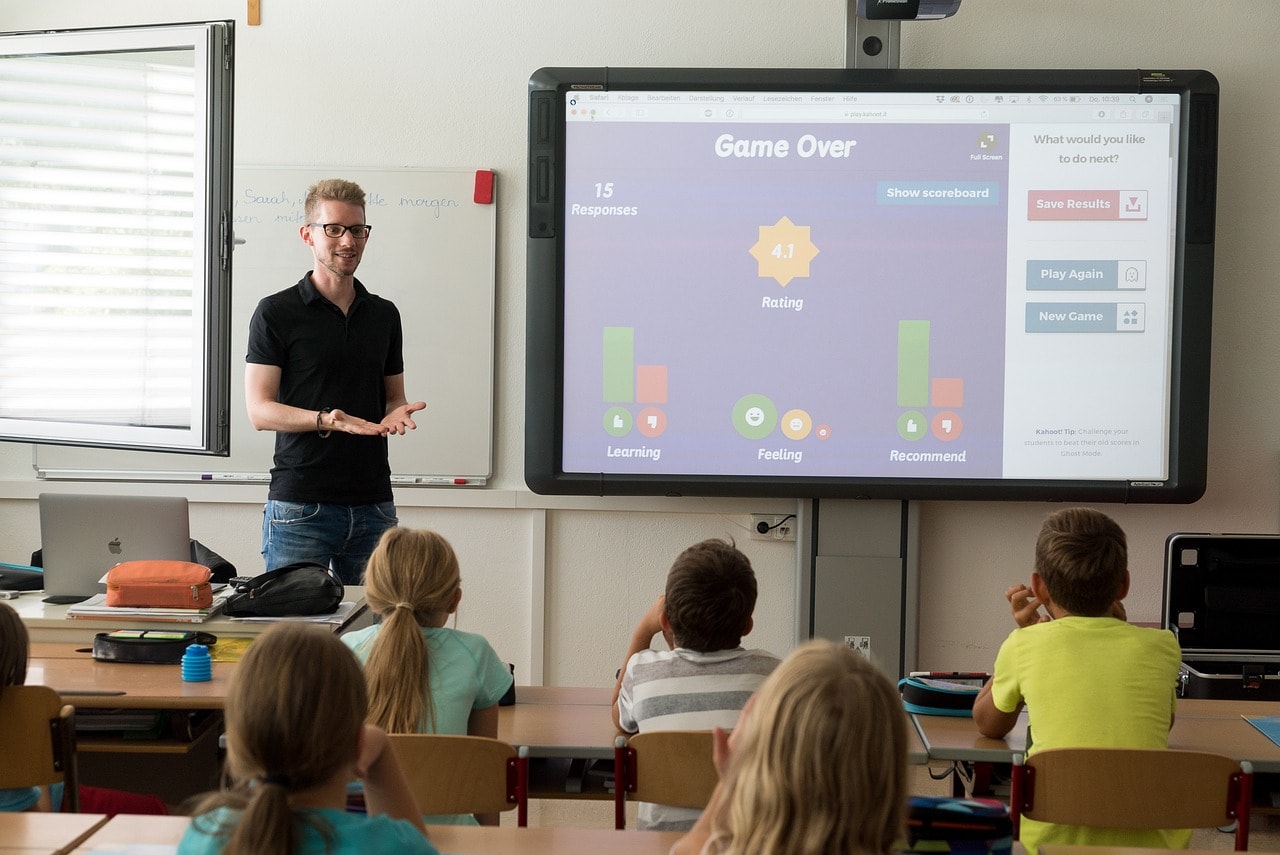
Another fantastic AI tool I’ve incorporated into my teaching is Brisk AI, which allows me to generate worksheets quickly based on the slide decks I’m using in class. This has been a huge time-saver, as it instantly transforms my teaching materials into structured, printable resources. What makes Brisk AI even more valuable is the ability to adapt these worksheets to suit the needs of all learners, whether that’s simplifying the language for students who need extra support, adding challenge questions for higher-achieving students, or incorporating different activity types to cater to a variety of learning styles. It’s a small change that has had a big impact on adaptation in my classroom.
Integrating AI in Coursework Feedback: Faster but Not Perfect
Another area where AI has been a game-changer is in analysing student coursework. By using AI to provide personalised feedback quickly, I can give students targeted advice on their strengths and areas for improvement. In BTEC classes, the built-in plagiarism detection tools have been particularly helpful in maintaining academic integrity. However, one downside is that AI-generated feedback, while efficient, sometimes lacks the nuance of a teacher’s professional judgment. I still find myself needing to tweak the AI’s suggestions to ensure the feedback is as meaningful as possible.
Why Artificial Intelligence Will Never Replace the Teacher
While I am a firm believer in the benefits of AI, I am equally passionate about ensuring it does not replace the role of the teacher. In my mind, there is nothing better than having a teacher in front of a class, demonstrating practically, answering questions, and adapting lessons to meet the needs of students physical education in real time. AI can support and enhance our work, but it will never replicate the connection, intuition, and adaptability that a skilled teacher brings to the classroom. The last thing I want is to be replaced by an avatar on a screen. Education is built on relationships, and no AI tool can substitute the value of human interaction in learning.
The Verdict: A Powerful Assistant, Not a Replacement
AI has undoubtedly helped me manage my workload more effectively, freeing up time for higher-value teaching tasks. However, it is not a flawless solution. While AI can streamline processes, it still requires human oversight to ensure accuracy, relevance, and a personal touch.
For fellow PE teachers considering AI, my advice is to embrace it as a tool to support, not replace, your expertise. Whether it’s drafting cover work, enhancing revision materials, or analysing coursework, AI can be a powerful ally in reducing admin burdens. Just don’t expect it to do all the thinking for you!
Responses