


This academic year, I’ve had the opportunity to mentor both a PGCE trainee and an Early Career Teacher (ECT). While both are at the beginning of their teaching journeys, I’ve found it vital to recognise and respond to the different levels of experience, confidence, and professional responsibility they bring.
At first glance, it can be easy to fall into the habit of offering the same kind of support to both, especially during busy terms packed with assessments, extracurricular, and curriculum planning. But just as we adapt our teaching for our pupils in lessons, we must also adapt our mentoring approach to meet the needs of our colleagues.
Understanding the Difference
A PGCE trainee is learning how to teach — experimenting with pedagogy, refining their teacher voice, building classroom presence, and often delivering sports and activities they’ve never played or taught before. An ECT, on the other hand, is already a qualified teacher, expected to deliver independently while still developing consistency, confidence, and a deeper understanding of the curriculum.
It’s easy to assume that once someone has gained Qualified Teacher Status, they’re “ready”. But the government’s decision to extend induction from one year (as Newly Qualified Teachers or NQTs) to two years for Early Career Teachers (ECTs) acknowledges that this longer period is essential. It provides access to sustained high-quality mentoring and additional professional development to not only support survival in the profession but also to help early career teachers thrive in what is a complex and demanding career (DfE, 2019).
We also need to remember we’re not just teachers of sport; we’re teachers of children. This means, while teaching new activities are important, equally vital is helping teachers understand how students learn. Mentoring should help develop a rich pedagogical toolkit — not just for delivering content, but for advocating interpersonal and intrapersonal skills, creating meaningful learning experiences that go beyond sport. Developing your pedagogical decision making and exploring a range of pedagogical approaches and models are key (Shulman, 1987). This exploration embeds reflective practice and helps teachers become and remain open-minded to new ways to approach teaching and learning (Quennerstedt, 2019 and Schön, 1987).

Using Coaching Conversations to Frame Feedback
When supporting both PGCE trainees and ECTs, one of the most effective approaches I’ve used is the coaching model. This model shifts mentoring away from “telling” and moves it towards empowering. It aligns closely with what Langdon and Ward (2015) call educative mentoring — an approach where mentors guide, model, and co-construct understanding with trainee teachers, rather than simply passing on knowledge. This developmental style of mentoring enables deeper reflection, encourages risk-taking, and ultimately builds greater teacher confidence. With PGCEs, this might involve questions like:
- “What do you think went well in your warm-up delivery?”
- “If you could redo that part of the lesson, what might you change and why?”
With ECTs, I tend to stretch this further:
- “How did that questioning strategy support learning?”
- “How did you know pupils understood the difference between an attacking a
- nd a defensive shot in badminton?”
These reflective questions help to develop a deeper awareness of teaching and learning. They also open honest conversations — something that should sit at the heart of any mentor-mentee relationship.

The Power of Co-Delivery
One of the most overlooked but powerful mentoring tools in PE is co-delivery. In our subject, trainees often face the challenge of teaching a sport they’ve never played at school, let alone delivered themselves. Co-delivery provides a safety net, but more than that, it offers a model of practice and a sense of shared responsibility.
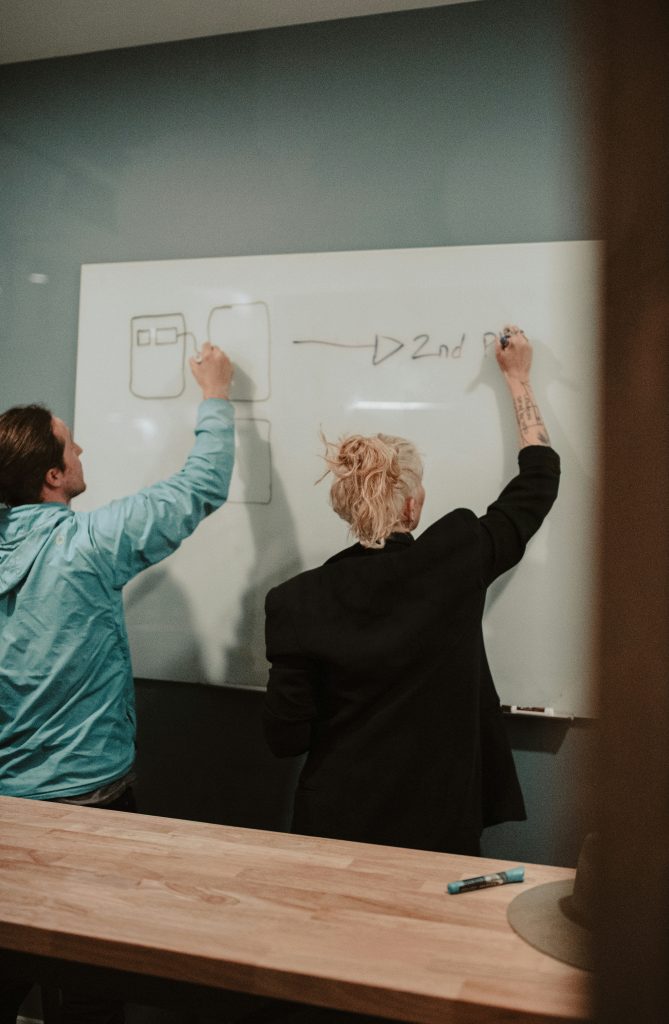
When we co-deliver, we make the invisible visible — the questioning, positioning, reinforcement, or adaptations we do instinctively. This echoes the principles of educative mentoring, where the mentor doesn’t just observe from the sidelines but actively models and co-constructs practice alongside the mentee (Langdon and Ward, 2015). It also gives us, as mentors, real-time insights into what support is needed, without relying solely on post-lesson debriefs. For PGCEs, this can build confidence quickly. For ECTs, it allows for collaborative refinement — a space to take calculated risks while still feeling supported.
Reflections from the Mentees
To further highlight the importance of tailored mentoring in PE, I’ve invited the two colleagues I’ve worked closely with this year to share their own thoughts. Hearing directly from them helps capture the real impact of coaching, co-delivery, and developmental conversations.
Bilal – PGCE
“This year has been a steep learning curve. Co-delivering lessons gave me the confidence to try new things without the fear of getting it wrong. Co delivery helped bridge the gap between theory from uni into practice.
Even though my mentor was busy, she took out time to help me plan lessons which were suitable for the year group and the class I would be teaching. This really increased my confidence and made me feel well prepared. The lesson plans that I did individually, were also looked at and constructive feedback was given by mentor on how I can improve them, this meant that I could make these changes before the lesson.
Having a mentor who took time to explain the ‘why’ behind their teaching choices made a big difference. It wasn’t just about telling me what to do—it was a conversation. I felt encouraged to experiment and reflect, and that made the learning experience more meaningful. This was useful especially when teaching gymnastics, it was a subject that I was not confident in teaching at all, my mentor gave me the drive to experiment and reflect on what went well and what I can do to improve.
My mentor balanced constructive feedback with genuine praise, this really motivated me to try and always improve. I remember on occasions, my mentor had given me some feedback on how to improve my warmups after a tricky lesson, instead of focusing on what went wrong. In our meetings, we would then unpick the lesson together which meant I could learn from this and make those immediate changes ready for the next lesson”
Finley – Early Career Teacher
“As an ECT, I’ve really valued having structured time with my mentor where I can reflect and refine lessons. I’ve never felt like I was just left to get on with it — there’s always been an open door for support. The coaching conversations have pushed me to think about pedagogy in a more critical way. I’ve also really benefitted from the shared teaching moments — even now, when my mentor pops into the lesson we are able to make small refinements through conversations which helps me better understand the effective pedagogy behind this. One thing I really have appreciated is how effective a short co-delivered lesson can give you so many ideas and confidence.”
Final Reflection – And sometimes, the most powerful tool we have… is simply teaching alongside them.

Mentoring is not just about supporting — it’s also about modelling. That means we must be Reflective, Adaptive, and Present. Whether it’s a PGCE trainee just starting out or an ECT developing their professional identity, they deserve tailored, empathetic, and empowering support. As mentors, we hold a mirror to practice, but we also open doors — to subject confidence, curriculum understanding, and professional growth.
Crucially, mentoring also sharpens our own practice (Lofthouse,2019). Through co-delivery, planning discussions, and reflective feedback, I’ve grown more deliberate in my teaching and more connected to the “why” behind my own decisions. It keeps me fresh, curious, and on a journey of continuous improvement.
I also recognise that mentoring — especially through co-delivery — requires time, and in the context of ever-growing workloads, that time isn’t always easy to find. However, the long-term impact of investing in this process is far greater. By committing to RAP — being Reflective, Adaptive, and Present — we’re not only developing better teachers, but we’re also building stronger, more sustainable PE departments.
These are just a few strategies that have worked for me — but I’m always learning. What approaches or insights have helped you grow as a mentor or mentee?
References
- Department for Education (DfE) (2019) Early Career Framework. London: Department for Education. Available at: https://assets.publishing.service.gov.uk/media/60795936d3bf7f400b462d74/Early-Career_Framework_April_2021.pdf (Accessed: 21 April 2025).
- Langdon, Frances & Ward, Lorrae. (2015). Educative mentoring: a way forward. International Journal of Mentoring and Coaching in Education. 4. 240-254. 10.1108/IJMCE-03-2015-0006.
- Lofthouse, R. (2019) Mentoring as professional development: ‘growth for both’ mentor and mentee, Professional Development in Education, 45(1), pp. 46–58.
- Quennerstedt, M. (2019) Physical education and the art of teaching: Transformative learning and teaching in physical education and sports pedagogy. Sport, Education and Society, 24(6), 611-623. DOI: 10.1080/13573322.2019.1574731
- Schön, D. (1987) Educating the Reflective Practitioner: Toward a new design for Teaching and Learning in the Professions, San Francisco, CA: Jossey-Bass.
- Shulman, L. (1987) Knowledge and teaching: Foundations of the new reform, Harvard Educational Review, 57(1), 1-23.
Responses