


Insights from Early Career PE Teachers
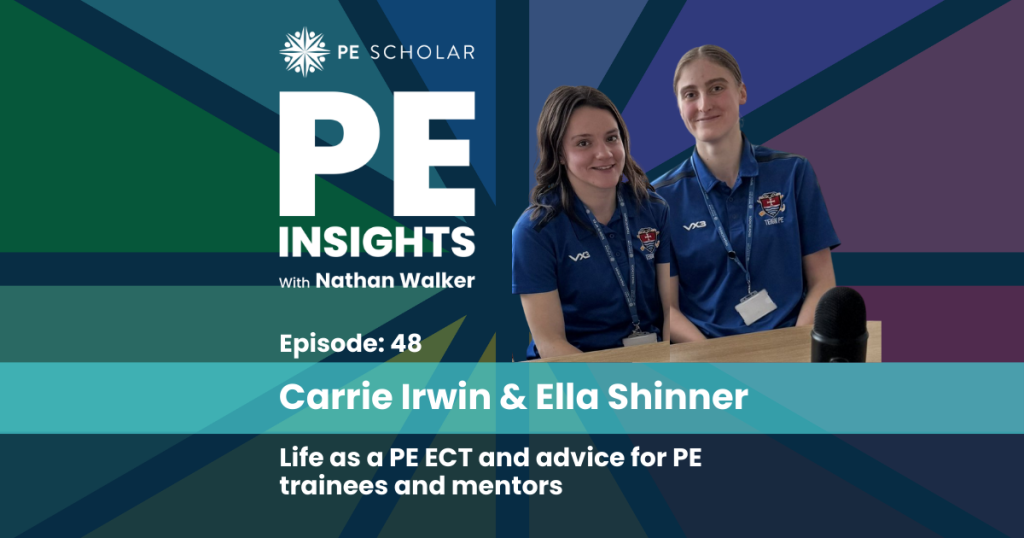
This podcast episode with host, Nathan Walker, features two recently qualified PE teachers, Carrie Irwin and Ella Shinner, reflecting on their experiences as Early Career Teachers (ECTs). They discuss the challenges, rewards, and advice for trainee teachers and subject mentors in an informal and insightful conversation.
Educational Journeys and PE Philosophy
Both Carrie and Ella share their paths into PE teaching, highlighting early leadership opportunities and university experiences. They emphasise the importance of holistic development in PE, focusing on physical, mental, and social well-being. Beyond skill acquisition, they value character development, student confidence, and pastoral care.
Navigating the ECT Year
Carrie and Ella describe their first term as challenging yet rewarding, having been thrown in at the deep end due to staff shortages. They quickly adapted, leading fixtures and clubs while establishing classroom routines. They credit their success to mutual support, experienced colleagues, and prioritising well-being. Reflecting on their experiences, they stress the importance of patience, self-trust, and work-life balance. They acknowledge that mistakes are part of growth and encourage new teachers to focus on progress rather than perfection. Ultimately, their passion for PE remains strong, as they continue to inspire students beyond just sports performance.

The Mentor-Trainee Relationship
Mentors play a crucial role in allowing trainee teachers to experience failure and learn from it. While mentors may foresee potential issues in lesson plans, trainees need the opportunity to adapt and problem-solve in real time. Teaching styles and lesson effectiveness vary based on students’ characteristics, so what doesn’t work for one class may be successful with another. Effective mentorship is built on open communication and honesty. While mentors hold ultimate responsibility for students, trainees should feel empowered to experiment and develop their teaching style. However, the level of intervention from a mentor should be adaptable, ranging from hands-on guidance for first-year trainees to more autonomy for those nearing qualification.
Advice for Trainees and ECTs
Feedback should be seen as a tool for development rather than personal criticism. Teachers should focus on progress and reflect on positive experiences to maintain confidence. Keeping a journal of daily achievements can help balance the emotional challenges of teaching. Teaching is an individual journey. Comparing progress with others can be demotivating, so trainees should focus on their own strengths and experiences. The diversity of teaching styles within a department strengthens the learning environment for students.
The discussion explores the gradual introduction of professional responsibilities for trainee PE teachers. Instead of taking on full responsibilities early, it suggests a “drip-feed” approach where trainees gradually participate in additional tasks. Trainees should take every opportunity available, such as running extracurricular activities or shadowing different roles. More exposure to real teaching responsibilities—like organising fixtures, managing pastoral duties, and handling logistics—better prepares them for their early careers.
Funding for PE Opportunities
Funding is a major barrier to providing diverse experiences in PE, particularly in outdoor education. Carrie and Ella share examples of successful funding bids in London and a SEND school, highlighting the need for better training on accessing financial support. More guidance on securing funding from Sport England and the National Lottery would help schools utilise local outdoor resources effectively.

Parental Communication
Building strong relationships with parents and carers is crucial for student success. Effective communication ensures students receive consistent support at home and school. The importance of positive phone calls is emphasised, as they can significantly boost student confidence and motivation. Trainee teachers often feel unprepared for challenging conversations with parents, and role-playing scenarios during training could help.
Creating a Positive PE Environment
Ensuring PE is inclusive and psychologically safe is essential. Teachers should recognise students’ anxieties, provide take-up time, and foster a welcoming atmosphere. Mixed-gender groups help break stereotypes, and lending kit removes barriers to participation. Addressing peer pressure and encouraging student voice make PE more engaging.
Challenges and the Future of PE
Stereotypes about PE being just “playing games” persist. Increasing awareness among parents and teachers about PE’s broader benefits is vital. Additionally, expanding PE to daily sessions could improve students’ physical and mental health, enhance academic performance, and help identify safeguarding concerns earlier.
One Word to Define PE
Carrie and Ella chose “enjoyable” and “safe” as key descriptors of PE, reinforcing its role in fostering a positive and inclusive environment for all students.
About the Guests
This episode is a conversation with Carrie Irwin and Ella Shinner, PE Early Career Teachers (ECTs)
Listen and Connect
To listen to the full episode please follow these links to Spotify or Apple Podcasts.

Responses