



Introduction
Host Nathan Walker welcomes Dr Julie Pearson to discuss care in physical education (PE). The central question explored is: Do we care about our subject too much? Julie reflects on her experiences in PE, from teacher training to higher education, and the lessons she has learned.
Journey into Physical Education
Dr Julie Pearson shares her path into PE, from growing up in Kuwait to training in Liverpool and teaching in London. Initially unsure of her career path, she was guided into PE teaching by her sixth-form teachers. She later transitioned from secondary PE to primary teacher education, realising the importance of understanding the unique challenges of primary PE.
A Culture of Care in PE
Julie’s research focused on developing a culture of care in PE and higher education. She explains three levels of care:
- Care About – A distant concern, such as donating to a cause.
- Care For – A more involved approach but still lacking mutual connection.
- Care With – A shared relationship where both parties give and receive care.
She emphasises that PE teachers often care deeply about their subject, but this can unintentionally push personal expectations onto students.

Challenging Labels and Competition
Julie critiques labelling students as sporty or non-sporty and highlights how competition in PE can be damaging. She argues that rigid labels shape students’ identities and limit their belief in their abilities. Instead, she advocates for a more inclusive, self-improving approach to competition.
Holistic Approach to PE
Julie emphasises the importance of a holistic approach to PE, integrating various aspects of movement, development, and enjoyment. She highlights how repeated exposure to the same activities can disengage students, making it essential to offer a diverse curriculum that fosters lifelong participation in physical activity.
Lifestyle and Physical Literacy
The concept of ‘lifestyle sports’ is explored, suggesting that PE should instil habits that extend beyond school years. The idea is to integrate physical literacy seamlessly into everyday life, ensuring that students see movement as an ongoing and enjoyable pursuit rather than a compulsory school subject.
Athletic Skills Model and Multi-Sport Approach
The Athletic Skills Model (ASM) is discussed as a means of promoting versatile movement skills. Instead of early specialisation in a single sport, a multi-sport approach is recommended to develop well-rounded athletes and reduce injury risks. By incorporating varied movement patterns, students can enhance their overall physical competence and adaptability.
Developmental Considerations in PE
A key point raised is the importance of understanding developmental stages when designing PE curriculums. Growth spurts can impact flexibility and increase injury risks, making it crucial to tailor activities to students’ physical development. This knowledge is often overlooked in coaching and education but is vital for injury prevention and long-term engagement.
The Role of Care in PE Teaching
A key theme is the importance of care in physical education. Julie emphasises that every student should feel included and supported, both physically and emotionally. Key principles include reconsidering the role of competition, avoiding restrictive labels such as ‘high’ and ‘low ability’, and fostering an environment where every child feels valued and capable. The analogy of climbing Mount Everest is used to highlight that each student begins their learning journey at a different stage, and it’s the role of educators to support and adapt their teaching to individual needs. Rather than a one-size-fits-all approach, students should have the freedom to navigate their learning in a way that suits their abilities while being guided by teachers.
Rethinking Traditional PE Activities
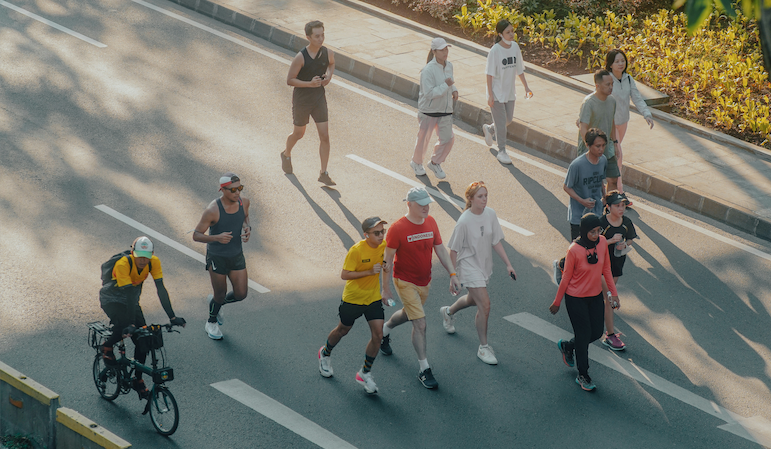
The podcast critiques certain PE activities like dodgeball and cross-country running, which can create negative experiences for students. The speaker advocates for modifying these activities to focus on participation and enjoyment rather than competition and exclusion. For example, adapting cross-country into a more social and inclusive experience, such as incorporating walking, cycling, and teamwork, was found to increase student engagement.
Advice for New PE Teachers
New teachers are encouraged to trust their training, learn from their community, and practise self-care. Teaching is an evolving process, and confidence comes from experience. A powerful analogy compares teaching to packing a parachute—educators and their support networks prepare new teachers to navigate challenges safely.
Final Thought: The Essence of PE
When asked to summarise PE in one phrase, Julie’s response is “life-enhancing,” emphasising its impact on personal growth, well-being, and lifelong engagement in physical activity.
A Call for Reflection
Julie urges teachers to pause, listen, and be present with their students. She champions an approach to PE that values enjoyment, inclusivity, and emotional wellbeing over performance and perfection.
About the Guest
This episode is a conversation with Dr Julie Pearson. Julie shares her experiences and insights, and gets us to reflect on care as an crucial consideration for all PE teachers and poses the question, is it possible to care too much about our subject?
Listen and Connect
To listen to the full episode please follow these links to Spotify or Apple Podcasts.

Responses