


Introduction to the Episode
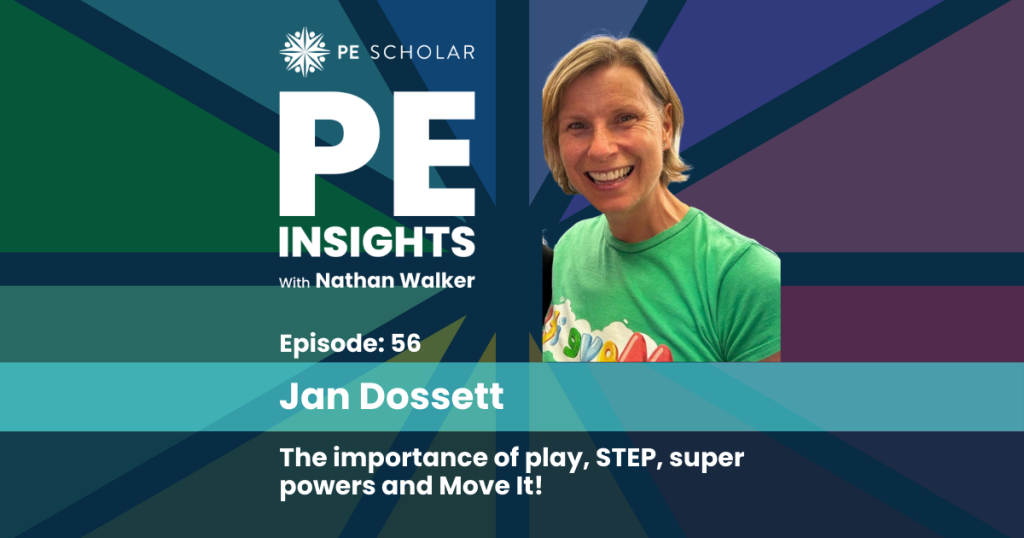
In this episode of the PE Insights Podcast, host Nathan Walker engages in an inspiring conversation with Jan Dossett, focusing on the theme of play—its value, impact, and continued relevance for both children and adults. Jan brings an infectious enthusiasm to the discussion, offering heartfelt reflections and expert insights that celebrate the joy and necessity of play in physical education and wider life.
The Importance of Play
Jan highlights that play is fundamental to development, not just in early years, but across all ages. It fosters creativity, physical literacy, social interaction, and emotional well-being. In PE, she argues, play should not be seen as a ‘nice to have’ but rather as central to learning. It allows children to explore, experiment, and make sense of their physical world in a meaningful and enjoyable way.
Play in Adulthood
The conversation also explores how adults benefit from play, particularly within professional and educational settings. Jan notes that adults often lose touch with playfulness due to structure and routine, but re-engaging with playful behaviour can boost mental health, innovation, and connection with others. PE teachers, in particular, can role-model this mindset, making learning environments more engaging and inclusive.
Navigating Tradition vs Innovation
Jan and Nathan explore the tension young PE teachers face when working in traditional departments resistant to modern methods. Jan highlights the importance of staying true to innovative teaching philosophies—such as Teaching Games for Understanding (TGfU)—even when faced with scepticism. She stresses that learning through gameplay still allows for targeted skill development, offering the analogy of a multilingual child: while early progress may appear slower, the long-term benefits in flexibility and understanding are profound.
The Role of Play in Development
Play is presented not as a frivolous extra but as a foundational pillar of childhood development. Jan passionately argues that early play experiences shape children’s attitudes toward PE. Effective play nurtures confidence, a sense of belonging, and a willingness to be active into old age. The physical, mental, and social benefits are immense, ranging from motor skill development to learning values like honesty, respect, and collaboration.
Parental Involvement and Unstructured Play
A strong case is made for engaging families in play. Workshops teaching parents to adapt games using household items aim to repair negative attitudes stemming from their own school experiences. Unstructured, spontaneous play is especially celebrated for fostering creativity and building lasting relationships. The podcast recounts playful family traditions during lockdown as testament to play’s enduring value across generations.

Fun as a Non-Negotiable in PE
Jan’s mantra, “Keep it simple, sunshine,” underpins a belief that joy must be central to PE. Fun doesn’t undermine learning; rather, it enhances it. Teachers are encouraged to create adaptive, engaging environments that value each child’s individuality. Importantly, Jan challenges the over-reliance on external coaches in primary schools, advocating instead for empowering class teachers who know their pupils best.
Key Takeaway
Fun, inclusive, and adaptive play builds lifelong positive relationships with movement—benefitting not just physical skills, but emotional and social wellbeing too.
About the Guest
This episode is a conversation with Jan Dossett
Listen
To listen to the full episode please follow these links to Spotify or Apple Podcasts.

Responses