


By Gwenno Iolo Davies
Let’s be honest, traditional athletics lessons are a bit outdated, with repetitive drills, stopwatch times and little real-world relevance. For those students who are less into sport, PE can feel pretty pointless. It’s time for a shift toward purposeful learning that sparks growth and keeps every student engaged.
What if we gave PE the relevance it deserves by transforming it into something that not only builds physical skills but equips students with real-world, transferable skills?
That’s exactly what this pedagogical approach did. It helped learners grow into ambitious, reflective and confident individuals both on and off the field. It moved beyond performance and tapped into purpose.
Redefining the Throwing Lesson
Discus. Shot put. Javelin. We know the drill: demonstrate, copy and repeat. Sure, students might grasp the basics, but terms like “angle of release” or “follow-through” often go over their heads making it difficult for them to understand these key teaching points and how they directly impact their performance. I wanted to change that.
So, I asked: What if students could actually see how their technique affects performance? What if they could break movements down like a coach or even an analyst?
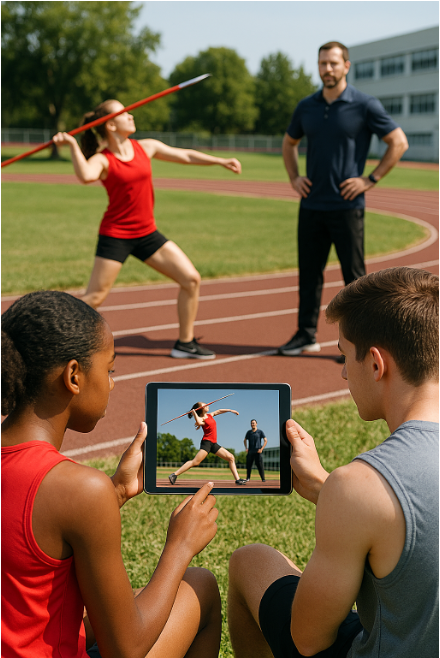
I found an app called Onform, a video analysis tool that allowed us to film throws, slow them down and break down each phase. Suddenly, biomechanics became visible. Data became tangible. And PE became interactive.
If we are being completely honest, most students won’t need to throw a javelin again after their school days, but the lesson goes beyond the throw. It’s about developing transferable skills like problem-solving, analysis, and feedback. Skills that are crucial in everyday life. Whether it’s making tough decisions at work, analysing business market trends or giving and receiving feedback in a team. These abilities help students tackle real-world challenges long after they leave the sports field.
When Students Take the Lead
The biggest shift? Students began leading the learning.
They reviewed their own throws, spotted mistakes, adjusted footwork, refined arm angles and experimented with timing all with excitement. They were eager to take turns in every role and used the correct vocabulary in real context instead of simply echoing teacher talk.
Of course, it didn’t happen overnight.
Early peer feedback attempts were vague and surface-level, like “That was good,” or “Try harder.” So, we added scaffolds such as sentence starters to guide them which included:
“I noticed that…”
‘This helped your…’
‘Next time, try…’
We paired these with a simple tick-box checklist including technical vocabulary, one specific strength, and a next step. Feedback became purposeful and complete.
As lessons progressed their performances improved, engagement skyrocketed and ownership grew. They weren’t just doing PE; they were learning in PE.
And through it all, the role of the teacher evolved. I still used my subject knowledge to model, explain, and provide vocabulary, but I also became the facilitator of progress and success. I created the conditions for reflection, guided improvement and built environments where every student could thrive.
Every child felt included. They could see improvement in real time and experienced success regardless of ability. It wasn’t just about physical progress. It was about well-being, relationships and self-belief.
Building a Culture Where Mistakes Fuel Growth
One of the most powerful shifts was in how mistakes were viewed. In typical athletics lessons, getting it wrong can feel awkward and uncomfortable, especially for adolescents still building confidence.
But here, mistakes became opportunities not setbacks. They were simply a starting point. Each mistake or incorrect technique, once spotted, brought a chance to improve and the students didn’t fear feedback. This didn’t just change performance, it transformed their mindsets.
Cross-Curricular Connections: Real-World Relevance in PE
The biggest surprise? The digital integration didn’t just boost performance, it made PE feel relevant.
Students weren’t just learning to throw further. They were using their digital competency to improve physical performance. Through video analysis and data tracking, they developed real-life skills like:
- Data analysis: spotting patterns and understanding numbers
- Digital literacy: navigating apps and spreadsheets
- Critical thinking: making decisions based on real-time feedback
They became confident, capable learners and that’s what education should be.

Physical Literacy for All: Targeting 100% of Students
What if we didn’t treat physical literacy as a concept that we drop in now and then, but as something woven into every lesson?
Athletics often feels like a space for the “sporty ones”. But with this approach, digital tools, student-led feedback and visible progress it became a space for everyone.
They didn’t need to be the best in the class, just better than they were yesterday. They were becoming the best version of themselves, and they could see it happening.
Next Step: Scaling It Across PE
This was just one unit – throwing. But what if we applied this approach across the whole PE curriculum?
From gymnastics to invasion games, swimming to striking and fielding, we can embed digital tools, peer analysis and mistake-friendly environments everywhere.
Students can track sprint times, slow-mo their badminton serves and even reflect on netball set plays to develop critical thinking skills needed for future life.
The next step? Start small and pick one unit, one tool, one class. See how students respond. Let them lead, reflect and watch them grow.
When we prioritise relevance, reflection, and real-time feedback, PE becomes something every student learns from not just the few who already love sport.
About the author
Gwenno Iolo Davies is a dedicated Physical Education teacher who began her career at Ysgol Gyfun Gymraeg Glantaf in Cardiff and now teaches at Kings’ School Al Barsha in Dubai. She is passionate about creating inclusive, engaging and progressive PE experiences, using physical literacy as a language to influence practice and promote cross-curricular learning.
Responses