



The December PE Scholar Monthly Meet Up provided an insightful session focused on leveraging the New Year as a time for a “reset” and establishing positive habits in PE. The discussion acknowledged that following the fresh start in September, routines often break down by December due to bad weather, fixtures and staff/student illness, making January an ideal time to start again.
The session followed the usual DEAL framework, incorporating discussions, sharing research and insights, reflecting on ideas, and concluding with a call for actionable tasks to share with colleagues. The main presentation framed the discussion around five categories for habit change:
- Personal habits
- Staff/colleagues
- Students
- PE lessons
- Wider enrichment/clubs/fixtures and influencing
1. Personal and Leadership Habits: Focusing on Deep Work
A central theme was improving personal and professional effectiveness. One participant highlighted the challenge of battling overcommitting across multiple schools, leading to light-touch support instead of valued, high-quality interventions. This struggle relates to the need for deep work and getting beneath the surface of difficult issues, such as SLT PE support, which requires time rather than quick fixes.
Another key leadership challenge discussed was establishing a collective vision for the department. Leaders must ensure their vision is clearly articulated and, crucially, commands buy-in from staff so that they drive it forward independently, rather than merely being “quietly compliant” because they like the leader. Failure to embed this collective energy can result in the “elastic band effect,” where staff revert to old habits once the leader removes their driving force.
Burnout and self-care were addressed, particularly the struggle of asking for help when pulling from “every pillar to post”. It was noted that acting like a “swan” by appearing composed on the surface but turbulent underneath doesn’t help oneself or colleagues. Mutual support allows a team to “bend and flex” and take the load when a colleague is struggling.
2. The Science of Habit Change
Recommendations for establishing new habits drew on James Clear’s Atomic Habits (suggested Christmas reading alongside The 5 AM Club and Deep Work). The four laws of behaviour change were applied to the school environment:
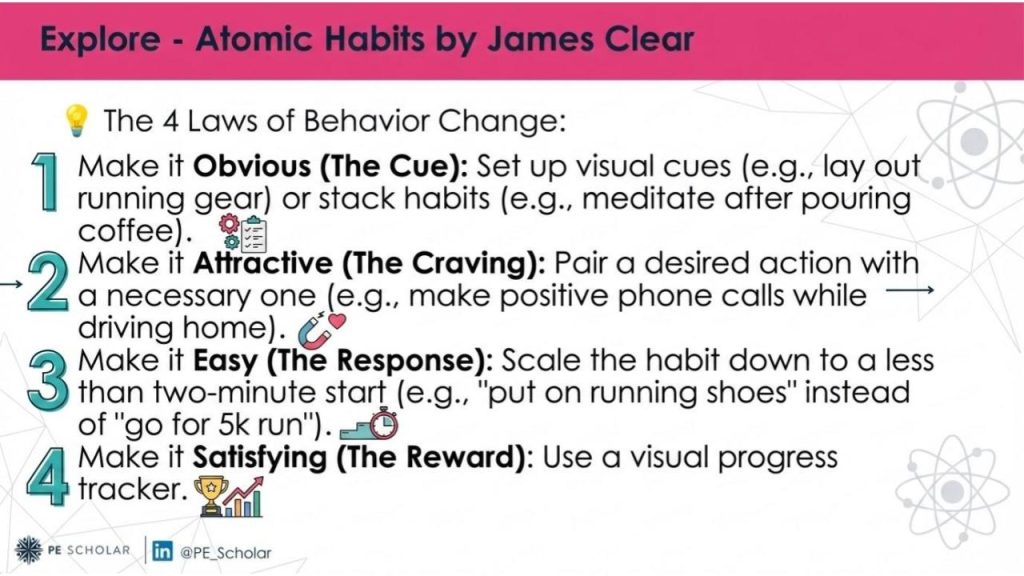
- Make it Obvious (The Cue): Creating visual cues to trigger habits. An example is stacking habits, such as committing to stretching while cleaning teeth.
- Make it Attractive (The Craving): Pairing the desired action with a necessary one. For instance, making positive phone calls home during the commute, turning an enjoyable task into a regular activity.
- Make it Easy (The Response): Scaling down a habit to make it less daunting. Instead of committing to a 20-minute run, commit to simply putting on the shoes; this often leads to the longer desired action.
- Make it Satisfying (The Reward): Using visual feedback to track progress. Habit stackers, which can be downloaded from the PE Scholar website, allow individuals or tutor groups to colour in a box each day they achieve their goal, providing a visual tracker.
If you prefer to listen to podcasts rather than read books, give this episode of Diaries of a CEO a go where James Clear covers a lot but the following framework to help with thinking about change management stood out for me:
| Category | Decision Characteristic | Guidance for Staff | Action Steps for Implementation | School Example |
| 🧢 Hat | Easily Reversible & Low Impact | Move Quickly: Encourage experimentation. The cost of a mistake is low and it can be changed instantly. | Decide Fast & Try It. Minimal discussion needed. Document only the result, not the process. | Changing the seating arrangement in a classroom. |
| 💇 Haircut | Fixable, but Takes Time & Effort | Be Thoughtful, Not Scared: Accept the risk of temporary discomfort. If it doesn’t work, it will take a while to “grow out” but it won’t be permanent. | Consult a Small Team. Review evidence, set a short trial period and make a decision. Allow for feedback after the trial. | Piloting a new ’20-minute daily reading block’do now activity’ in lessons. |
| 💉 Tattoo | Irreversible or Very Difficult/Costly to Reverse | Move Slowly & Think Carefully: This choice leaves a lasting mark. Do thorough research, seek wide counsel and prioritise consensus. | Seek Broad Stakeholder Input. Conduct multiple meetings, gather data and create a multi-year plan before committing. | Adopting a new curriculum or changing what you assess in PE. |
3. Creating Positive Habits for Staff and Self
The webinar offered specific strategies for improving well-being and managing workload:
- Email Culture: Teachers should model healthy boundaries. Suggestions included using schedule send for emails written outside working hours, or establishing a clear rule, such as not checking work emails once leaving the school building. The immediacy of replying triggers a dopamine hit, contributing to email chains and eroding personal time.
- Protecting Time: Committing to finishing teaching and leaving the building on a specific day, or committing to protected family time on weekends.
- Staff Engagement: January is a good time to reach out for volunteers to support PE initiatives. Ideas for improving staff physical well-being included implementing a 15-mile challenge, running social after-school clubs, hosting structured staff fitness sessions (like Pilates or Boxercise), or improving the staff room environment with active elements like table tennis. It was argued that if teachers improve their physical literacy, they are better able to support students’ physical literacy.
- Whole-School Well-being: If every teacher is a teacher of literacy, they should also be a teacher of well-being. A laminated poster outside tutor rooms, where teachers write what they are doing to look after their well-being, can encourage conscious health choices.
4. PE Lesson and Student Habits
Practical advice was shared for improving student habits and lesson delivery:
- Visual Activity Tracking: Using a pack of wristbands (or similar visual markers) that students put on at the start of a lesson if they have been active since the previous PE lesson. This sparks conversations about active habits and brings “visible learning” into PE.
- Routines and Disruption: Given the disruption the department often faces (wet weather, mock exams), January is a good time to reset routines related to changing time, registers, and collecting kit. It is important to address low-level disruption, as good routines are necessary before higher-order teaching skills can be unlocked.
- Pedagogy and Curriculum: Use student voice to inform changes to activities or groups immediately after Christmas. When the curriculum is disrupted, teachers can use the Teaching Personal Social Responsibility (TPSR) model to focus learning objectives on priceless skills (kindness, organisation, commitment, responsibility) rather than solely focusing on physical skill development.
- Holistic Objectives: Ensure lesson objectives are holistic, encompassing elements beyond sporting performance, such as Attitude, Skills, and Knowledge (ASK) or the concepts of Move, Think, Feel, Connect.
5. Inclusion and Long-Term Strategy
The discussion wrapped up by emphasising the importance of reaching disadvantaged students:
- Targeting Support: PE staff should aim to do less for children already supported by community sport and focus more on SEND and disadvantaged students who lack access outside of school.
- Deep Inclusion Work: A suggested action was for staff to commit to focusing on one disadvantaged or SEND student per term. This might involve observing them in other lessons or consulting the SENCO to understand where they thrive, noting that helping one child often results in helping five or six others simultaneously.
Why not start every staff meeting reflecting and discussing if you are M.A.D with a specific focus on disadvantaged/SEND students in pairs:

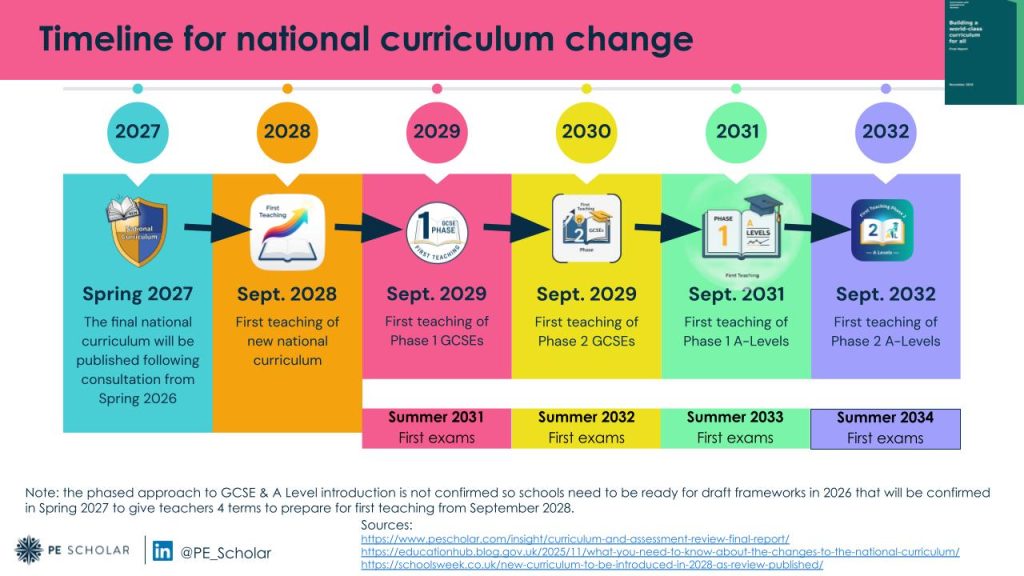
- Future Curriculum Changes: Attendees were reminded that a draft version of the new national curriculum for PE is expected by Easter (Spring) 2026, with implementation by September 2028. Given these impending changes, departments should prioritise improving pedagogy and the craft of teaching now, rather than spending excessive time refining schemes of work which will likely need changing anyway.
The webinar ended with signposting to future meetings in January and February focusing on examination PE standardisation, assessing what matters most and future curriculum insights.
Responses