


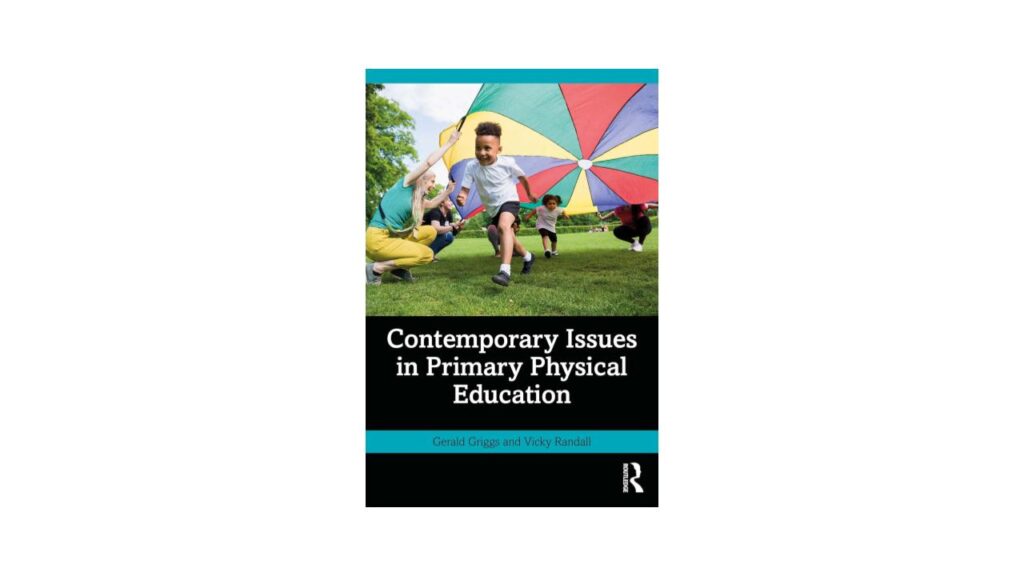
Chapters 1–3: Framing the Contemporary Condition of Primary Physical Education
The opening chapters establish the conditions within which primary Physical Education currently operates. Rather than beginning with pedagogy or activity choice, the book starts with context. Physical Education is presented as a subject shaped by social concern, policy direction and historical inheritance. That framing matters. It makes clear that the issues facing primary PE are structural as well as practical.
Chapter 1 positions the subject within a wider climate of anxiety about children’s health, inactivity and wellbeing. Physical Education is frequently drawn into these debates as a corrective mechanism. The authors argue that this repeated positioning has consequences. When a subject is defined by external problems, its internal educational purpose can become obscured. The chapter does not dismiss health or wellbeing as legitimate concerns. Instead, it asks what happens when they become the primary justification for the subject’s existence. Without conceptual clarity, practice becomes reactive.
The second chapter deepens this argument through the debate around “core” status. Calls for Physical Education to be recognised as a core subject are examined carefully. The political appeal is obvious. Core subjects tend to carry protected curriculum time and institutional weight. However, the chapter questions whether elevation within a system shaped by performativity and accountability necessarily strengthens educational integrity. The historical hierarchy embedded in the 1988 Education Reform Act is used to illustrate how status is tied to measurement and standardisation. The implication is not that PE should avoid recognition, but that recognition brings structural implications. Increased scrutiny may reshape content and pedagogy in ways that do not align with the subject’s distinctive qualities.
Chapter 3 turns attention to curriculum content and power. It traces the historical dominance of traditional team games and situates this within colonial expansion and Victorian public school values. The purpose is not to dismiss established activities, but to expose their contingency. What appears neutral often reflects particular cultural histories. The chapter introduces the contemporary movement to decolonise curricula and asks whose movement practices are legitimised in primary PE. Participation data is used to question whether the activities privileged in school reflect the ways children actually move outside it. The argument extends beyond adding new sports. It addresses pedagogy, representation and the distribution of authority in curriculum design.
Across these chapters, a pattern becomes visible. Physical Education is repeatedly shaped by forces beyond the classroom. Public health agendas, accountability structures and inherited sporting traditions influence what is taught and why. At the same time, there is evidence of professional uncertainty. Generalist teachers operate within expectations that are often ambitious but insufficiently supported. Outsourcing and policy interventions attempt to address perceived weaknesses, yet they also reconfigure professional identity.
What is most useful in this section is the insistence on examining assumptions. The subject is not treated as a settled entity. Its purposes are contested. Its structures are historically produced. Its current pressures are politically mediated. That perspective alters how everyday decisions are interpreted. A unit of work is no longer simply a sequence of lessons; it reflects a position on what knowledge and experience matter.
By the end of Chapter 3, the reader has not been offered a new model or programme. Instead, there is a sharpened awareness of how primary Physical Education has arrived at its present form. That awareness is not comfortable, but it is necessary. Without it, reform risks repeating the same patterns under different labels.
Chapters 4–6: Agency, Pedagogy and Professional Judgement
Chapters 4 to 6 move from structural critique to questions of enactment. The focus shifts towards how curriculum is shaped in practice and how professional judgement operates within constraint. These chapters are less concerned with what primary Physical Education has inherited and more concerned with how it is lived.
Chapter 4 addresses pupil voice. The starting point is a rights-based position grounded in Article 12 of the UN Convention on the Rights of the Child. Pupils are not simply recipients of provision; they are entitled to be heard. The chapter is careful to distinguish between consultation and influence. Gathering opinions is not the same as redistributing authority. The use of Lundy’s framework clarifies that authentic participation requires space, voice, audience and evidence of impact.
What is helpful here is the insistence that pupil-led curriculum is developmental rather than dramatic. It does not require abandoning structure. It requires transparency about how decisions are made and visible acknowledgement when pupil perspectives shape provision. The implication for primary settings is practical. Teachers already know their classes well. The challenge lies in converting relational knowledge into curricular influence without undermining coherence.
Chapter 5 interrogates the growing interest in models-based practice. Structured pedagogical models such as Sport Education or Teaching Games for Understanding are presented as potential correctives to perceived inconsistency in primary PE. The chapter does not dismiss these models. It recognises the clarity they can provide. However, it questions the assumption that importing a model constitutes improvement.
The analysis of ideological positioning is particularly valuable. Models are not neutral templates. They carry assumptions about knowledge, competition, skill progression and the purposes of sport. In primary contexts, where relational continuity and cross-curricular integration are central, strict model fidelity may sit uneasily. The chapter argues for discernment. Models may be useful tools, but they cannot substitute for clarity of purpose. Without that clarity, pedagogical innovation risks becoming procedural compliance.
Chapter 6 turns explicitly to professional learning. It frames teaching as decision-making under conditions of uncertainty. Rather than treating dilemmas as deficits, the chapter categorises them as conceptual, pedagogical, cultural and political. Confidence gaps, outsourcing arrangements and the persistence of traditional sports days are presented as examples of competing values rather than simple errors.
The discussion of professional learning communities is grounded and pragmatic. Short-term training sessions are contrasted with sustained, collaborative enquiry rooted in pupil need. The cyclical model proposed requires teachers to identify a learning priority, engage in development activity and evaluate impact on children. The emphasis on evaluation is deliberate. Professional learning is not validated by attendance but by influence on practice and outcomes.
Across these chapters, the book resists easy solutions. It acknowledges systemic pressure yet retains faith in professional agency. Teachers are neither passive implementers nor autonomous actors free from constraint. They operate within frameworks shaped by policy, culture and history. The quality of primary Physical Education depends on how those frameworks are interpreted.
The common thread through Chapters 4 to 6 is responsibility. Curriculum design, pedagogical choice and professional development are positioned as deliberate acts. Improvement is not located in a single initiative or imported model. It rests on thoughtful judgement exercised collectively.
Chapters 7–9: Culture, Constraint and Curriculum Design
Chapters 7 to 9 extend the argument beyond policy and pedagogy into questions of culture and future direction. The emphasis shifts from how primary Physical Education is shaped to how it might be reoriented.
Chapter 7 introduces the concept of a whole-school movement culture. The discussion moves away from counting activity minutes and towards examining how movement is embedded across the school day. A distinction is drawn between a pathogenic orientation, where movement is justified primarily as disease prevention, and a salutogenic orientation, where movement contributes to meaning, coherence and wellbeing. The difference lies in purpose. In one model, movement is scheduled and instrumental. In the other, it is integrated and responsive to cognitive and emotional need.
The chapter draws on embodied cognition to argue that thinking and moving are not separate processes. Classroom design, transitions and informal spaces therefore matter. A school may timetable two hours of PE each week yet remain structurally sedentary. The argument is not that PE lessons are insufficient, but that movement culture is broader than subject allocation. This widens the responsibility for physical engagement beyond the PE specialist and into leadership and whole-school planning.
Chapter 8 tightens the focus by identifying three dominant fixations that shape primary PE: health, sport and workforce reform. Health is frequently positioned as the central justification for the subject. Rising obesity rates and inactivity statistics generate urgency. Sport retains cultural authority through competition and performance pathways. Workforce reform, particularly through outsourcing and specialist provision, is presented as a corrective to perceived inadequacy.
The critique is measured. The authors acknowledge the legitimacy of each rationale. The difficulty arises when one becomes dominant and narrows the field. When PE is judged primarily by step counts or competitive success, other educational purposes recede. When outsourcing becomes the default response to confidence gaps, professional capacity within schools may weaken over time. The chapter argues that sustainable development depends on resisting reduction. A subject defined by a single outcome becomes vulnerable to policy fluctuation.
Chapter 9 turns towards reconstruction. The historical origins of the six traditional activity areas are examined to demonstrate that curriculum structure is contingent rather than fixed. Games, gymnastics and athletics emerged within specific social and political contexts. Their continued centrality reflects habit as much as deliberation.
The chapter situates this inheritance within broader sociological change. Participation patterns have diversified. Identity construction has become more individualised. Informal and lifestyle activities coexist alongside traditional sport. In this context, the assumption that curriculum categories should remain unchanged is questioned.
The proposed matrix model offers a different organising principle. Activities are mapped according to environment and movement characteristics rather than historical silos. This reframing does not require abandoning established activities. It requires justifying them in relation to educational purpose and local context. Schools are encouraged to consider geography, community culture and pupil interest when shaping provision.
Across these chapters, the book advances a consistent position. Primary Physical Education must be designed consciously. It cannot rely solely on inherited structures or dominant narratives. Culture influences practice. Policy directs attention. Professional judgement mediates both.
The final impression is not of rupture but of responsibility. Reimagining the subject does not depend on dramatic innovation. It depends on deliberate selection and clear articulation of purpose. Whether movement is framed as compliance, competition or cultural participation remains a professional choice shaped by context and conviction.
Personal reflection
Reading Contemporary Issues in Primary Physical Education has unsettled and sharpened my thinking in equal measure. Teaching in a 3–16 setting, I have always viewed curriculum coherence as central to strong practice. However, I am relatively new to the primary phase. This book has helped me recognise how different the conceptual and cultural foundations of primary PE are from secondary provision, and how easily assumptions transfer without scrutiny.
One of the most significant impacts has been on how I think about purpose. In a 3–16 school, there is a natural inclination to seek alignment across phases. That can lead to primary provision subtly mirroring secondary structures: activity blocks, sport units, performance language. The historical tracing of activity areas in Chapter 9 made me pause. Many of the structures I had taken as given are products of early twentieth-century priorities. That realisation does not invalidate them, but it forces a question: am I designing for children aged 7 and 8, or preparing them prematurely for Key Stage 4?
My interest in curriculum design meant the matrix model in Chapter 9 was particularly thought-provoking. Organising provision through environment and movement characteristics, rather than solely through traditional silos, provides a conceptual tool I can use immediately. It offers a way to maintain coherence while widening representation. In a 3–16 context, it also invites a clearer articulation of progression. If physical literacy is the through-line, then curriculum architecture must reflect more than exposure to sports; it must reflect breadth of movement experience.
The book has also deepened my understanding of physical literacy. The salutogenic framing in Chapter 7 aligns closely with my belief that movement should contribute to meaning and agency, not simply activity targets. The emphasis on embodied learning reinforced something I have observed but not always articulated: children think through movement. The primary years are not a simplified version of secondary PE. They are developmentally distinct. If physical literacy is genuinely the goal, then relational pedagogy, exploration and varied environments matter as much as technical competence.
As an advocate of models-based practice, I found Chapter 5 particularly useful. It did not dismiss MBP, but it challenged the assumption that models are neutral improvements. The discussion around ideological positioning was uncomfortable at times. Models carry values. They privilege certain outcomes. In primary contexts, strict fidelity may overlook the relational continuity that defines much of early schooling. I remain committed to models-based practice, but I am more alert to the need for adaptation rather than replication. The question has shifted from “Which model?” to “For what purpose, and in what form?”
Chapters 4 and 6, focusing on pupil voice and professional learning, resonated strongly in a 3–16 context. Secondary structures can sometimes emphasise subject expertise over co-construction. The rights-based framing of pupil voice and the insistence that professional development must demonstrate impact on children have prompted me to reconsider how primary colleagues are supported. Improvement cannot be reduced to importing expertise from the upper school. It requires sustained dialogue rooted in the needs of younger learners.
More broadly, the book has strengthened my confidence to interrogate dominant narratives. Health and sport are important. However, the critique of “unhealthy fixations” clarified how easily they can narrow the field. In a whole-school setting, where competitive sport often carries institutional prestige, this insight is valuable. It helps me hold ambition for performance alongside commitment to inclusion and meaningful engagement.
For others in the PE sector, the book offers something different from policy guidance or pedagogical manuals. It does not provide ready-made units or assessment frameworks. Instead, it provides conceptual clarity. Subject leaders, early career teachers and experienced practitioners alike will find it useful because it names the tensions many feel but struggle to articulate. It exposes inheritance, questions habit and provides tools for thoughtful redesign.
In a period where primary Physical Education is frequently pulled in competing directions, this text encourages measured reflection. For me, it has reinforced that curriculum design is an act of professional judgement. Physical literacy, models-based practice and whole-school culture are not competing agendas, but elements that require careful alignment.
Responses