


Introduction
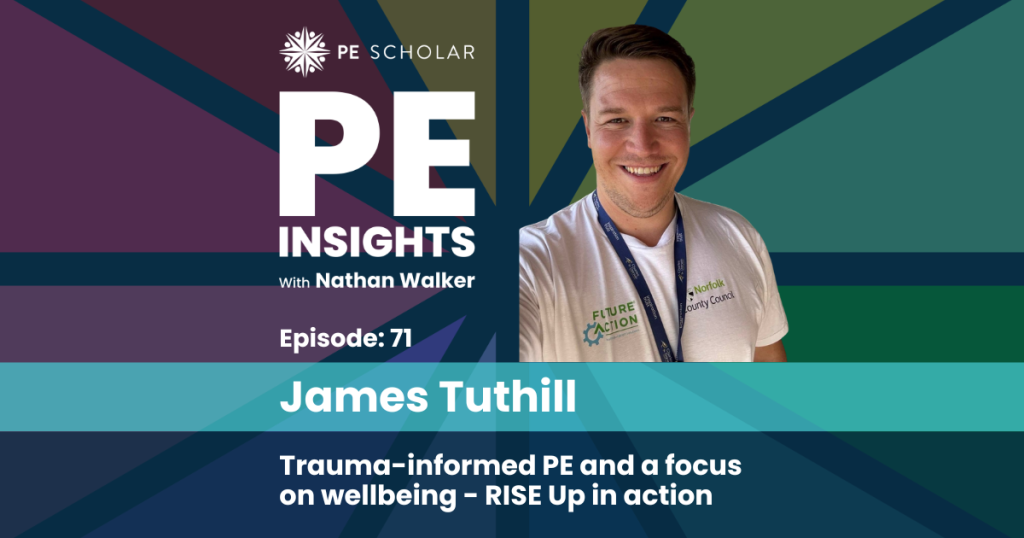
James Tuthill, PE Lead at Charles Darwin Primary School in Norwich, discusses his proactive shift toward integrating well-being and trauma-informed practice into the primary PE curriculum, leveraging external partnerships to drive change.
Primary PE: The PPA Cover Challenge
James’ journey began by seeking recognition for PE in his city-centre school, which, lacking grass, relies on a “concrete jungle” playground. He forcefully argues against the common perception that primary PE is merely “PPA cover” (Planning, Preparation, and Assessment time) for class teachers.
- Hidden Learning: He believes that relying on external cover prevents class teachers from seeing their students “shine” and excelling in movement spaces, missing valuable insights into their physical development (e.g. core strength, handwriting readiness).
- Advocacy: James, who started as a coach and became a specialist PE teacher, is advocating for specialist PE teachers to lead CPD within the school and across the trust to enhance the value of the subject.
Implementing the Rise Up Programme
James partnered with Neil Morgan of Future Action to bring the Rise Up early intervention programme, typically aimed at secondary schools, into his primary setting.
- Intervention Group: The initial focus was a Key Stage 2 intervention group of children who needed re-engagement with school life but were not necessarily receiving support from specialist agencies.
- Trauma-Informed Themes: The programme worked through crucial well-being themes: zones of regulation, confidence, sleep, healthy habits, and “happiness chemicals” (dopamine).
- Rise Activities: Following a brief theoretical input (15-20 minutes), the children participated in activities based on the Rise Up acronym, allowing them choice over their physical release:
- Repeaters: Focused on activities like skipping or running.
- Inclusive Teams: Small games in a safe court area.
- Stress Busters: Activities like using boxing pads to release tension.
- Energisers: Challenging skipping routines to set personal goals.
- Impact: The initial case study showed “staggering” impact, leading James to implement the findings into the whole-school curriculum.
Curriculum Integration: The Two-Hour Split
Following the successful intervention and leveraging the increase in funding for two hours of PE per week, James introduced a split curriculum model:
- Core Lesson (Real PE): Focuses on core skills, technique, and action, using an interactive approach.
- Contrasting Hour (Well-being/Rise Up): Focuses on pupil choice and well-being. This hour starts with a choice of RISE activities (e.g. stress busters or inclusive teams) and includes active check-ins to understand why children chose a specific activity and how it helps them.
James notes that students can easily distinguish between the two sessions, often asking, “Are we doing games [choice] or are we going in the hall first?”. The free-choice, well-being hour is generally preferred by the children.
The Well-being Cornerstone
James argues that well-being should potentially be the new cornerstone of PE, linking physical activity to children understanding the importance of being “healthy happy and connected”.
- Rebranding PE: He suggests that PE could potentially be rebranded as Well-being, creating a channel for children to understand themselves better, which supports physical literacy.
- Next Steps: His third case study will focus on exemplifying individual aspects of RISE (e.g. focusing a group entirely on Repeaters) and ensuring a smoother transition for children moving up into secondary school.
Quickfire Questions and Professional Insight
James’ responses centre on inclusion and embracing chaos:
| Category | Response Details |
| Non-Negotiables | Pure inclusion; students must be engaged and active straight away upon entering the environment, with no wasted time. |
| Mantra | “Active for life.” This includes teachers modelling their own positive engagement (e.g. running races, achieving personal bests). |
| Removal from PE | The perception that primary PE is generally looked at as “PPA cover” for class teachers. |
| Advice for New Teachers | Don’t be afraid to let it go a little sideways. If a lesson starts deviating but the children are having a positive, active experience, embrace it. |
| One Word for PE | Empowering. PE should be empowering in the many directions it can take young people. |
Conclusion
James advises reluctant primary teachers to start with simple, classic games and lean on sports leaders to help implement the activities, building momentum through pupil engagement.
About the Guest
This episode is a conversation with James Tuthill, PE Lead at Charles Darwin Primary School in Norfolk.
Listen
To listen to the full episode please follow these links to Spotify or Apple podcasts.

Responses