



Welcome to the third instalment in our comprehensive blog series designed to support teachers in guiding their students through PE GCSE exam revision. As educators, you play a crucial role in preparing your students for academic success, and we’re here to provide you with effective strategies to enhance your teaching.
Our series began with exam preparation tips, offering insights on how to help students set up productive study schedules and create conducive learning environments.
Last week’s insight focused on reviewing content, providing structured approaches to breaking down key topics and concepts essential for the exams.
Today, discover active learning and revision techniques to make your lessons and students’ revision more engaging and impactful.
Active learning and revision
In this insight, we’ll explore the science behind active learning and revision, practical strategies to implement in your PE classes and encourage students to use at home. By incorporating active revision techniques, you’ll be able to boost your students’ memory retention to foster a deeper, more lasting comprehension of the material.
In last week’s insight, we explored memory as an information processing model. We discussed the differences between, sensory, short-term, and long-term memory and the importance of logging information into long-term memory. We considered ways of assisting this process by reviewing content. By making notes, students will have already made connections between understanding and logging content into their short-term memories. To help this content to be moved into long-term memory, students should engage their senses as much as possible through active learning and revision.

Figure 1: The revision cycle
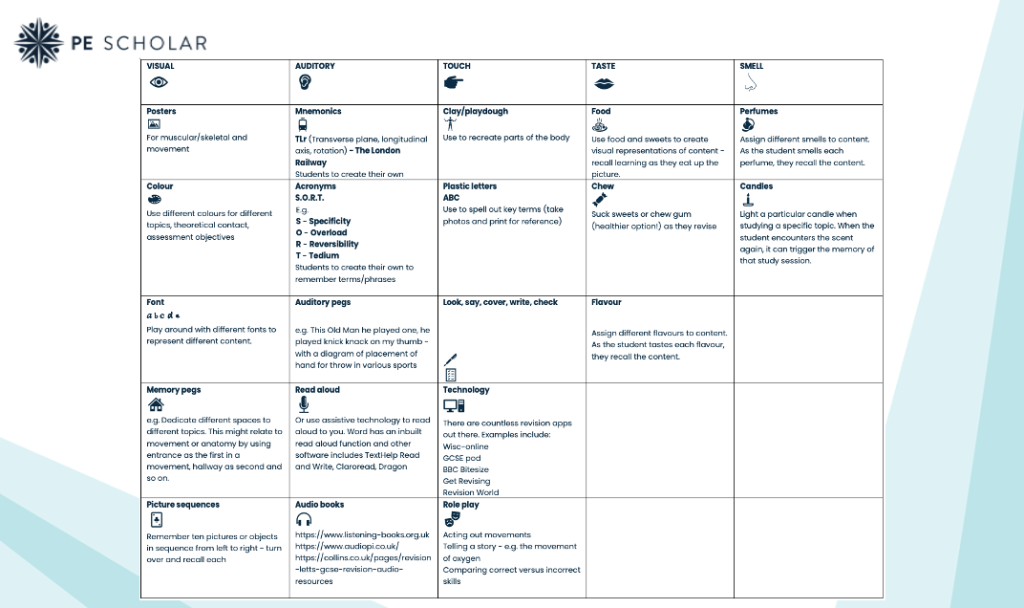
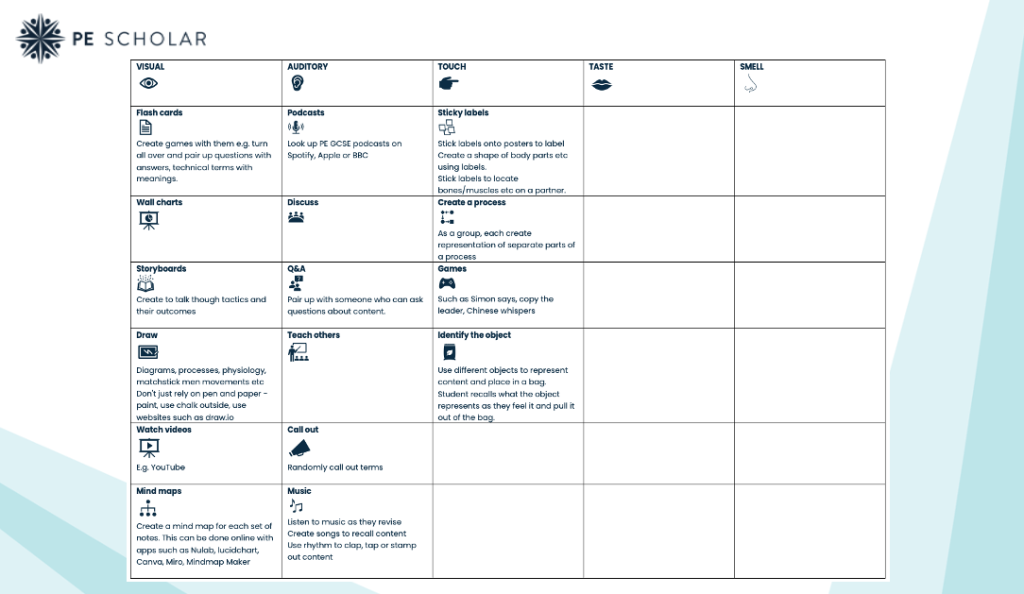
As Figure 2 below outlines, the importance of active learning in your classes through applying, practising and demonstrating what they’ve learnt is paramount to memory retention. Then it is up to the students to use active revision to retain as much information as possible. This involves engaging all the senses.

Figure 2: Active versus passive learning, adapted from Dale (1946)
Here are some ideas for multisensory active learning that you could use to deliver topics in class or encourage your students to use at home to revise:
Motivated to remember
In addition to sensory active learning, it’s important that your students are motivated to remember, and have growing metacognition.
To some extent, this will depend on their ambition to do well in the exam. However, remember that this ambition can sometimes result in too much pressure and have the opposite effect.
Set out learning objectives at the beginning of the lesson. Create intention to learn and remember. Ensure there are no distractions when attention is needed. Check learning at the end and reward small achievements. Encourage students to do the same with their own revision.
Cultivate interest in their learning – learn what motivates your students and ensure they know and use this too.
Engage prior learning – use students’ existing knowledge to relate to new material. Help them to grasp the bigger picture before focusing on smaller details. PE is a subject that lends itself well to this as there are plenty of practical experiences that can be drawn upon to explain more complex theoretical concepts.
Be selective – it will not be possible to remember everything, so remind students of the main requirements that were discussed in the first lesson. Decide what is important and focus on this. If certain content is particularly complex and/or overwhelming, suggest students focus on the main ideas.

Metacognition
This involves a developing awareness of one’s own learning processes and applying strategies that have worked in different contexts and for different purposes.
As students begin note-taking and active revision, encourage them to reflect on what works well and what doesn’t. Remind them that revision is personal – everyone learns differently. Suggest they adjust their revision timetables and approaches as they progress, to be flexible to their developing metacognition.
In class
Your feedback will help. During class activities, note when students are actively engaged and when they are less so. Help them recognise when they learned best and what contributed to this. Also, encourage them to reflect on times when they were distracted, or uninterested, and why this might be.
Conclusion
Active revision is a powerful tool that can significantly enhance memory retention and understanding, crucial for excelling in the PE GCSE written exam. By integrating active revision strategies into your teaching, you not only prepare your students to tackle exam questions with confidence but also equip them with lifelong learning skills.
Incorporating techniques such as practice quizzes, interactive discussions, and application-based activities can transform the way your students engage with the material, making revision an active, enjoyable, and highly effective process. As you guide your students through this journey, remember that the skills they develop will serve them well beyond the exam, contributing to their overall educational and personal growth.
References
Dale, E. (1946). Audiovisual methods in teaching. New York: Dryden Press.
Further insights in this series
Next week, to ensure your students can effectively apply their knowledge, we will discuss how to use past papers and construct answers.
Additionally, we’ll focus on wellbeing strategies, emphasising the importance of your students maintaining a healthy balance during the revision period.
Watch
Watch this session on Securing GCSE success in PE
Responses