



It has long been accepted that learning walks are a powerful part of school improvement tool kit, typically school or department leaders will ‘walk the school’ and see bitesize snippets of learning, usually focused on what the teacher or students are doing at that time. They are valuable insights for school leaders at all levels to gain information on teaching, learning and engagement. They provide a culture barometer for the school’s climate. I have always believed they support professional development for the leader, as the lesson visitor, they can ‘magpie’ the best bits from the teaching they see. It is always a real privilege to see others teach and learn from their expertise to develop your own teaching.
This year we have tried to look at this through a different lens, an evolution of a learning walk. The whiteboard walk.
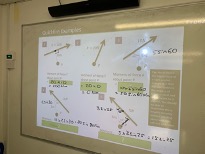
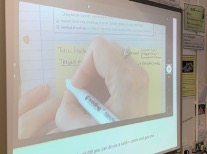
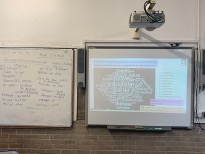
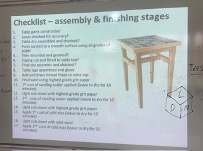
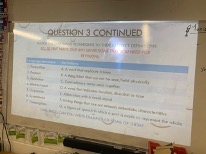
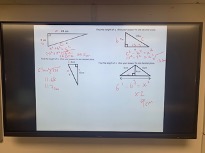
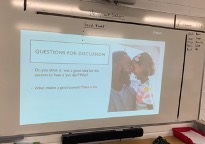
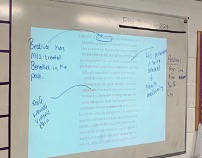
In essence, it is a learning walk, leaders still walk the school and benchmark what is happening in the classroom. However, at that given point they take a picture (snapshot) of what is on the whiteboard at the time of visit.
It is truly fascinating to see the lesson through the eyes of the students. The Whiteboard Walk has helped sharpen our focus in many areas.
Now, before we go any further, we need to acknowledge the limitations. Is it a good proxy for learning? No! No one is claiming it to be. Do teachers need feedback on picture taken? No, not necessarily, it is a small indictor of what is being delivered as part of the learning process. It is also not always appropriate to take the picture and interrupt learning (however you cannot cherry pick what you see!)
So, what is it good for?
We have found that Whiteboard Walks have sharpened our lessons and professional development in the following areas.
Precision learning walks
Before, our learning walks were too random, uncoordinated, and often followed a similar route in the same order, always seeing the same teachers at the same point of their lessons. They became predictable. Now, because we want photo comparison points, we are much more deliberate about choosing a subject, year group or time of day to give a more accurate, more honest, and more authentic insight into what is actually happening and being see within the school.
This approach allows us to discuss, compare and debate what we have seen with a visual reminder. We can really consider curriculum coverage, consistency of delivery for a subject or year group and the learning experience students are actually receiving.

Pedagogy techniques and informing future CPD
Most leaders can spin off techniques that teachers use in their lessons; however, do they really know how often each are being used, is there a bias to one or another? Is there an over reliance on a particular visual and are students experiences one dimensional? We are not using Whiteboard walks to coordinate which subjects have to deliver in a particular way, however we are using them to be better informed about what is really going on in lessons. How many snaps do we have of teachers using the visualizer? Or when have we actually seen live modelling on the board vs a power point click through, unannotated slide? Are teachers using different forms of media? video clips? animations? have you actually seen this?
When we have this insight, we are better able to progress our CPD offer to ensure we are either developing the mediums being used the most or grow underdeveloped options that may offer more leverage in some areas.
The view in room
Do we have the best learning environment? Is one of our standard planning questions. Typically, we think hard about seating plans and the visuals we use, but have you ever really seen it through the student’s eyes? Have you sat in the different seats and viewings points in the classroom? The seat where the teachers monitor blocks the bottom corner or the board? The table on an angle that makes it really hard to read the far side. The Whiteboard Walk snapshots have cast a different light on what students really see in lessons and why not all seats are equal. Premium seating has become a known thing across the school. Seating plan rotations and considerations take on a whole new meaning when these snaps are shared.
Curriculum overview
Whiteboard walking the same year group in the same subject is a department culture indicator. You can quickly get an overview about the consistency of delivery, or the different approaches used for meeting the different needs of students within the classroom. The questions and conversations with subject leaders when including visuals of what has been seen makes for a better conversation.
The care and craft in teacher presentations
‘How you do anything is how you do everything’ (Harv Eker) is a favourite quote we use. Seeing how teachers present content to learners is a sign of how well they understand learning. Have they really thought about what needs to be shown and when? Is there a consideration to information overload? Is their room for teachers to annotate or model further? Is there the focus on learners with additional needs? Font size, style, backgrounds, and colours all play apart in the delivery. Again, it can demonstrate if learning has taken place, but it can highlight part of the thought process the teacher is going through. A great conversation starter!
Whiteboard walks are the starting point for many aspects of pedagogy. They provide a stimulus for a separate way of experiencing the classroom offer. For us this is a different tool, as part of a bigger tool kit from which to view learning. I am not sure where it will go or how it last, all I know is at the moment this is a welcomed addition to different layers of school quality assurance.
Give it a go, share your pictures with others in your school and see what you can learn about your school from a unique perspective, it is simple, but some of the most effective ideas are. Thanks for reading.
Examples of Whiteboard walks, snap shots
Responses