


Recent educational updates, including the latest Ofsted inspection toolkit, underscore a critical priority for physical education: building a world-class curriculum for all. However, significant barriers to PE still exist for many students, whether related to special educational needs and disabilities (SEND), gender, health, socioeconomic status, or race and ethnicity.
The research paints a stark picture:
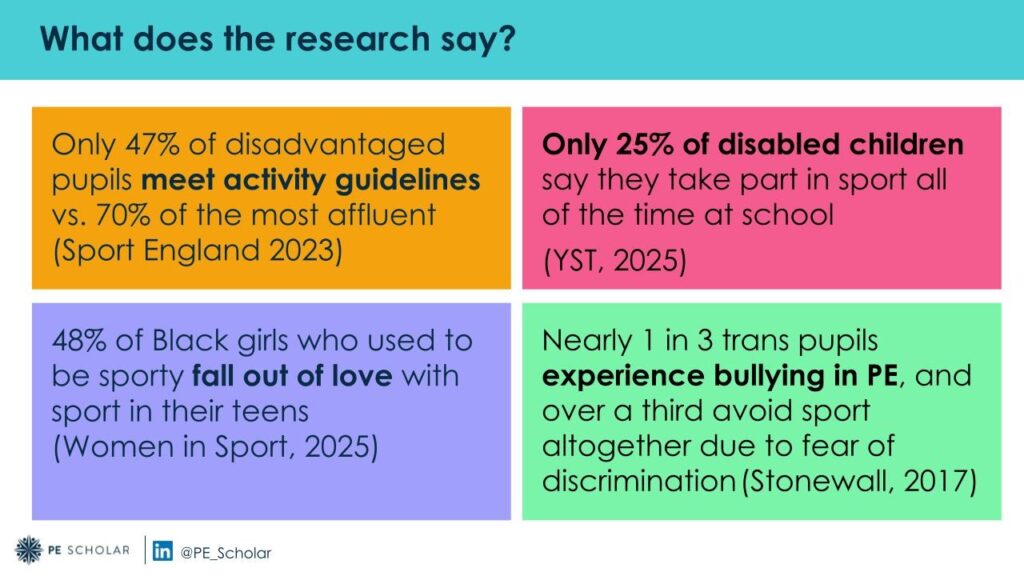
To overcome these and plenty more visible and hidden barriers, we must shift from simply offering equality to providing equity. We must ensure everyone gets what they need to succeed. True inclusion is about fostering a sense of belonging where every student feels respected, valued and supported.
Drawing on some of the ideas discussed in the 1st April Members Monthly Meet-up webinar, here are some top tips and strategies to help teachers reduce barriers to wellbeing and learning in PE:
1. Build Relationships and a Sense of Belonging
Relationships are the foundation of inclusive PE and can be improved by:
- Implementing a meet-and-greet for every single lesson and using students’ names early and often
- Providing micro-affirmations to boost the morale of low-confidence pupils
- Empowering students by giving them meaningful roles (like “Coach” or “Official”) using our lanyards and offering open activities that allow them to choose their starting point
2. Reduce the “Kit” Barrier
The PE kit is a common point of anxiety and exclusion so why not:
- Keep uniform requirements consistent, limit branded items and offer choice informed by student consultation on kit
- Maintain a “spare kit box” with clean clothes in neutral colours and ensure it is offered without shame
- Allow students to arrive at school already in their PE kit to reduce changing-room anxiety, lost learning time and also establish a routine for quiet, private kit support before the lesson begins
3. Adopt a Trauma-Informed Approach
Creating a psychologically safe environment is crucial for student engagement. Do you:
- Start your lessons with a smile and actively “narrate the positives” (e.g. “I see you’re trying…”)
- Never publicly sanction a student for forgetting their kit or experiencing exhaustion; always have these conversations privately
- Provide “calm zones” or reset roles for students who feel overwhelmed, as predictable routines foster the safety required for true engagement
4. Design an Adaptable, Holistic Curriculum
Your curriculum should reach all young people and start with a strengths-based approach by focusing on what a child can do, rather than what they can’t. Could you:
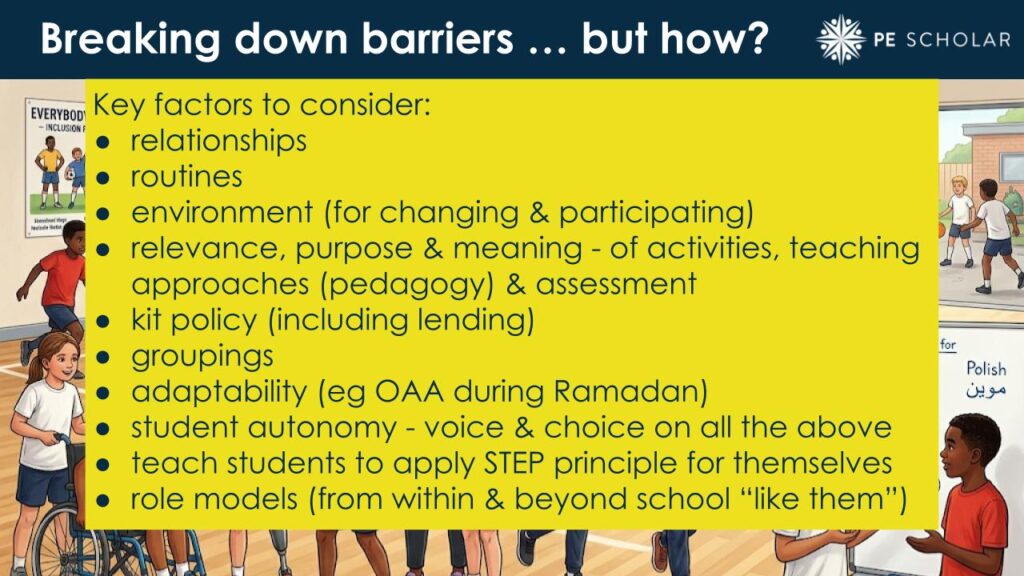
- Teach students to use the STEP framework themselves to dynamically adjust the Space, Task, Equipment, or People to increase or decrease the challenge and facilitate success for everyone
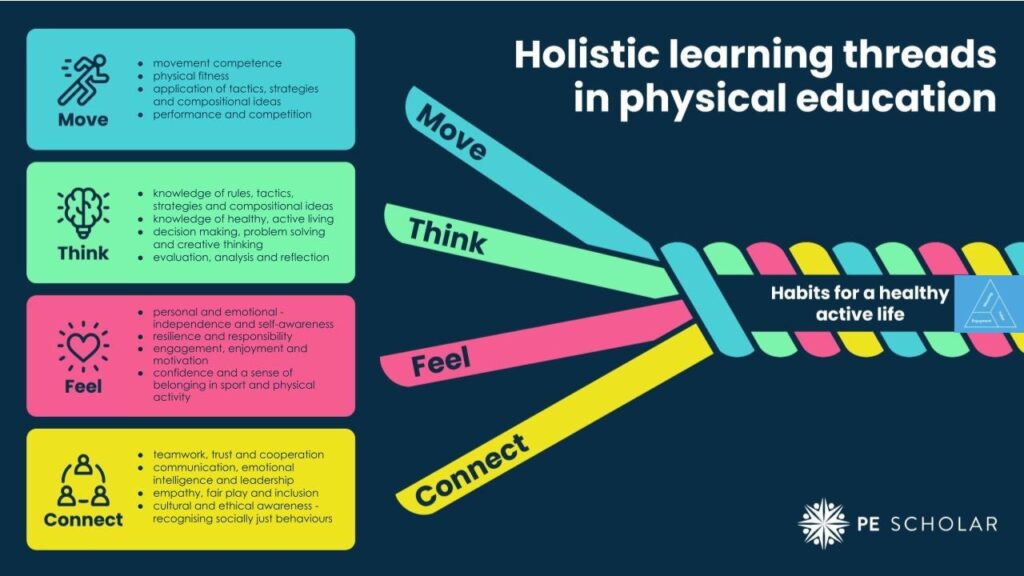
- Move beyond purely physical outcomes by weaving in holistic learning threads: Move (physical competence), Think (tactics and problem-solving), Feel (confidence and resilience) and Connect (teamwork and empathy)
- Consider creating “PE Profiles” for students with higher needs to map out successful support strategies across physical, sensory, communication and social areas.
5. Amplify Student Voice and Co-Creation
You cannot break down barriers if you don’t know what they are. Do you:
- Utilize annual PE surveys and “quick feedback” forms to listen to your harder-to-reach groups?
- Adopt a “you said, we did” approach so students know their feedback is actively shaping the curriculum and their learning environment?
By applying these practical steps, educators can begin to systematically dismantle the barriers to physical education, moving beyond basic participation to cultivate lifelong habits for a healthy, active life. For further ideas and inspiration, teachers can explore the Inclusion & Adaptive Practice Toolkit, listen to our PE Insights Podcast or explore further CPD opportunities and members can access the full recording of the session via the links in their newsletter.
Responses