



Written by Lee Sullivan
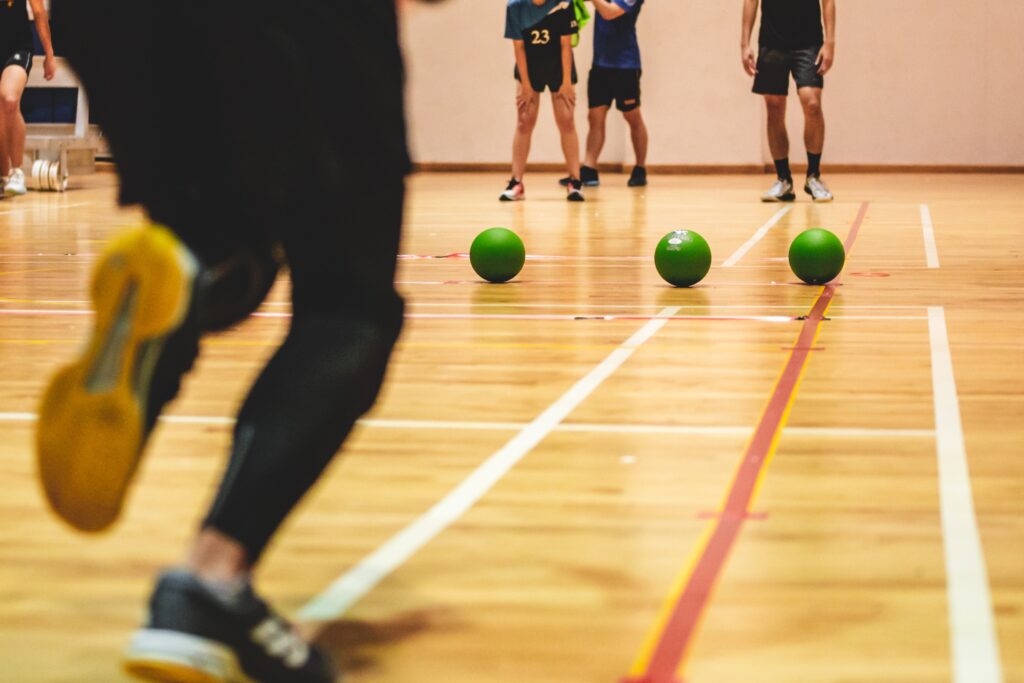
Picture this: a school gym, teams picked, balls lined up, and the game promptly begins. The game caters to large numbers, takes minimal time to set up and has been a go-to for PE lessons during those wetter winter months. Dodgeball has been seen as a fun, competitive activity that promotes physical fitness and teamwork. It’s an easy choice for PE teachers looking to engage large numbers of students in an active, fast-paced game. However, following a recent observation, I have found myself asking whether the time has come to remove dodgeball from my PE lessons. I have found myself asking does dodgeball truly align with the values and goals we set for our PE curriculum? This blog aims to assess whether it is time to ditch dodgeball in PE.

Similar Story
On a typically rainy October morning in England, faced with the challenge of a staff member being absent and a supply teacher stepping in, I encountered a familiar dilemma. I had a decision to make: confine a class to a classroom of meaningless poster making or utilise the sports hall and double-up classes to engage them in some form of physical activity. The choice was clear – let’s get them moving!
As a convenient and quick option, I decided to set up a game of dodgeball within seconds, dividing the students into two teams. The rules hardly needed any explanation, and we were ready to commence the game promptly.
However, as I observed the game unfolding, I began to notice something that had previously escaped my attention. It became apparent that a number of students were feeling distinctly uncomfortable. Some students appeared anxious and apprehensive, their expressions revealing a sense of unease. They seemed hesitant to fully participate, often hanging back and avoiding the more intense exchanges of the game. It wasn’t difficult to see that dodgeball was creating an environment where certain students felt vulnerable and excluded.
In that moment, I realised that this seemingly harmless game, which had always been a convenient choice for a rainy day or when class sizes needed to be accommodated, might not be as inclusive and beneficial as I had previously assumed. While it offered physical activity, it did so at the cost of some students’ comfort and well-being.
The Easy Option
It’s understandable why dodgeball has been a popular choice for PE teachers and students alike as one-off lessons or as part of a curriculum. During wet weather, when playing sports on the field or other outdoor spaces isn’t possible, dodgeball can become a convenient indoor option. Staff sickness or limited space can lead to combined PE classes with a higher number of participants. Dodgeball’s simplicity and its ability to accommodate many players at once make it a practical choice in such scenarios. Some have opted to deliver dodgeball schemes of work, whereby introducing games like dodgeball can inject excitement and engagement into PE classes.
It’s fair to say that dodgeball is often seen as an easy pick for PE teachers to include in the curriculum for several reasons:
- Familiarity: Dodgeball is a well-known and easily recognisable game. Most students have played it before, so there’s no need for extensive rule explanations or learning new skills, which can save time in class.
- Minimal Equipment: The game typically requires minimal equipment—just dodgeballs and a gymnasium or outdoor space with boundaries. This simplicity makes it accessible for schools with limited resources.
- Active: Dodgeball is a highly active game that gets most students moving.
- Competitive Nature: The competitive aspect of dodgeball can be appealing to students. It can be exciting and motivating, encouraging them to actively participate and strive to win.
- Teamwork: While dodgeball is competitive, it might also foster teamwork. Players on the same team need to collaborate, communicate, and strategise to eliminate opponents and avoid getting out themselves.
- Minimal Preparation: PE teachers may find dodgeball requires less planning and preparation compared to other activities.
- Variety: Dodgeball offers variety in the PE curriculum, providing a break from more traditional sports and activities. Variety can help keep students engaged and interested in physical education classes.
- Student Interest: Many students enjoy playing dodgeball.
Whilst there are undoubtedly arguments for dodgeball in PE, we must consider whether dodgeball truly aligns with the aims and values of our PE delivery.
Inadvertently Teaching Oppression
In the article Dodgeball: Inadvertently Teaching Oppression in Physical and Health Education, Joy Butler, David Burns and Claire Robson provides a strong argument as to why it is time to move away from including dodgeball in our PE curriculum. The paper examines the ethical implications of including dodgeball in physical education curricula. The authors begin by emphasising the importance of sports and physical activities in teaching ethics, fostering friendship, solidarity, and fair play, but they argue that dodgeball, as a game, does not align with these values. They highlight several reasons for revisiting the debate about dodgeball in schools.
Arguments in favour of dodgeball include its perceived popularity among students, the development of physical skills, and preparation for competitive situations. However, opponents argue that dodgeball’s use of the human body as a target is unacceptable in an educational context. They also question whether it promotes genuine physical activity or encourages aggression, particularly against weaker students. Furthermore, they challenge the game’s intention of eliminating other players, which can negatively impact students’ self-esteem.
The paper then explores how dodgeball fails to meet the requirements of a caring school community, such as modelling ethical behaviour, facilitating meaningful dialogue, providing opportunities for practicing caring, and confirming caring actions. Instead, it perpetuates aggression, power imbalances, and a lack of student agency.
The authors apply an anti-oppressive ethical analysis to dodgeball, arguing that it normalises bullying and aggression, especially against marginalised students, and reinforces oppressive cultural norms. They suggest that dodgeball’s hidden curriculum promotes violence and marginalisation.
Finally, the paper employs an Aristotelian virtue ethics perspective to assess dodgeball. It concludes that dodgeball does not encourage just the right amount of aggression but rather habituates students into excessive aggression, making it incompatible with ethical virtue education.
Dodgeball vs Values
While sports can offer valuable opportunities for ethical development, we must scrutinise each game to determine if it aligns with the learning aims and values we should have in PE. Continuing to explore and present the compelling research from the aforementioned article by Joy Butler, David Burns and Claire Robson it is clear that dodgeball falls someway short of meeting these aims.
In PE, we aim to cultivate an ethic of care among students, encouraging them to demonstrate empathy, cooperation, and fairness. Dodgeball, however, encourages the opposite—aggression, dominance, and exclusion. The game’s hidden curriculum promotes violence, marginalisation, and powerlessness, which are antithetical to the values of empathy and respect that should underpin PE.
Dodgeball perpetuates marginalisation by allowing stronger students to eliminate weaker ones, reinforcing oppressive hierarchies. The research indicates that those who oppose playing dodgeball raise concerns about the game’s violence and potential for bullying. Violence, whether physical or psychological, should not be a part of any educational activity.
Dodgeball also fosters a sense of powerlessness among students, especially those who are marginalised or less physically capable. When the game is dominated by the strongest players, it teaches students that they must comply with the will of the strongest, eroding their ability to make choices and advocate for themselves. Such experiences contribute to a sense of exploitation, as those who possess more power exploit those with less power.
Can Dodgeball still form part of our delivery?
Despite my arguments against the use of dodgeball in our PE curriculum, you might be surprised by my answer here. No, it is not time to ditch dodgeball. While I believe dodgeball shouldn’t be a mandatory part of the PE curriculum due to its potential for exclusion and harm, I also acknowledge that the game can be genuinely enjoyed by those who choose to play it. By offering dodgeball in a less obligatory and more voluntary context, we can keep the joy of the game alive while ensuring a safe and enjoyable experience for everyone. So, rewinding back to that October day of wet weather, what would I have done differently? Quite simply, I would have offered the choice. The choice to participate in dodgeball or another activity so that students have the choice to participate in dodgeball on their own terms.
By offering dodgeball in an extra-curricular setting or an autonomous pathway, we provide students with a choice, empowering them to decide whether they want to participate. It’s essential to respect the preferences and comfort levels of all students, and an opt-in approach accomplishes just that.
Conclusion
Dodgeball, as demonstrated by the research article discussed in this blog, falls short of the learning aims and values we should have in PE. While proponents argue that it’s motivating and teaches physical skills, these benefits do not outweigh the ethical concerns raised – instead of promoting values like empathy, fairness, and cooperation, dodgeball reinforces aggression, dominance, and violence. In an educational environment where inclusivity, respect, and equity should be paramount, dodgeball appears out of place without careful consideration of how students can opt into or opt out of participation in favour of an alternative activity.
To fulfil the true potential of PE as a vehicle for ethical education, we should consider alternative activities that better align with the values we aim to instil in our students. Dodgeball may have its merits as a game, but its place in the PE curriculum, as shown by this analysis, raises important ethical questions that we should address for the benefit of our students’ overall development. Dodgeball can still be used in a PE setting but as an activity that students actively opt-into in their own time.
Further information on dodgeball
Click here for an assessment matrix for dodgeball
Click here for dodgeball variations
Not too long ago I wrote about dodgeball on a social media platform and the post received quite a few replies, many stating the same article as you Lee, as well as Faith Newtons work on SEND and many other “Hall of Shame” contributors. Ironically, the post was about using dodgeball as part of a concept curriculum which I think you may know something about.
What I failed to mention in the original post was what dodgeball looks and feels like in our lessons, as it’s probably not the same large number teacher quick fix go to(which is probably why all the naysayers jumped on the band wagon too quickly!). When used thoughtfully and creatively dodgeball can certainly be a vehicle to promote meaningful, caring and valuable PE.
For example, our girls favourite version is dodgeball jail. Think dodgeball meets benchball (another one for the naysayers perhaps). Once out, a player runs to a bench at the back of the court on the opposite side. Here, in order to get back in, they must receive a catch from their team mates. This requires problem solving in several ways as the accuracy and velocity of which the balls are thrown has now changed, as the aim is to make sure the ball IS caught by a team mate, but not caught by the opposition. It removes the meaningless chucking that is often seen and turns the game into a more accurate one where choice of pass, technique, aim and decision making are more apparent. The game is more continuous, lasts longer and is not determined by brute strength or power.
On the other court at the same time students might be playing the traditional form but using different balls, of their choosing, usually lighter and larger that are easier to catch and sting less when hit, allowing them to enjoy the original format but taking away the fear of bruising. The option of choice is the meaningful component here.
At the same time some may have blown up a Kinball and are wildly running around chasing each other with it by pushing it along the floor. Ever been chased by a 50inch bright pink beach ball? Much fun! They also play in a circle with players in the middle. The outside players aim to push the ball across the middle to knock the opposition over whilst they dodge and dive to avoid being hit. Year groups have developed their own rules to this game which has organically evolved and been given many different names such as skittles and circle of doom.
Finally on the fourth court we have the sitters. These girls have developed a game which looks a little more like crab football or *goal ball where players are sitting down and shuffling rather than standing and running. Some teams use fly away footballs whilst others use bean bags to slide across the floor into a goal or to strike an over turned bench. The aim is less about dodging and perhaps more about finding space, but the use of agility, catching and throwing, teamwork and decision making are all there. (*Goal ball has also been a huge hit at our school, not relevant here as noisy sports hall means it won’t work, but if you’ve never tried it, I encourage you.)
Whilst there is certainly a place for the original format, if we want to be fully inclusive, we have to consider the emotional and social wellbeing of our students too. We must ask ourselves why we are using dodgeball as the teaching vehicle today? What is its purpose? If we are considering move-think-feel-connect for all, the vehicle it takes doesn’t need to be the same for everyone, for everyone to meet the same goal.
Embracing adaptive and creative pedagogies and embedding the power of choice means even on those cold October mornings with 60+ students in a sportshall and supply staff there to support, we can still deliver Positive Experiences in PE.