


Introduction: The Science, Art and Craft of Physical Education
When we think of “high-quality teaching” in Physical Education, our minds often jump to the mastery of a technical skill or the excitement of a high-tempo performance. However, a recent OECD report, Unlocking High-Quality Teaching, suggests that the true “unlock” for student outcomes lies in the sophisticated interplay between “scientific research, an art requiring creativity and a craft necessitating constant collaborative reflection and improvement” p3).
While the report draws from a broad range of international data, its findings offer a powerful mirror for PE departments across school contexts, helping physical education teachers think more sharply about teaching PE through the PE curriculum for pupils and young people in primary schools and secondary schools. If we are to move beyond “Busy (active), Happy (having fun) and Good (behaving)” (Placek, 1983; Quennerstedt et al., 2024) and truly impact children through a high quality curriculum, we must examine the five key “levers” of teaching quality through a PE-specific lens rooted in sport pedagogy, informed by Sport England, and alert to how teaching practices and teaching methods shape student learning, the learning process, positive attitudes and supportive environments in different contexts, from the early stages of teacher development to the work of experienced teachers, with professional development and continuing professional development helping to enable pupils and level the playing field, including where sport premium and sport premium funding influence provision and competitive elements.
PE is compulsory for all pupils from Year 1 to Year 11, which makes a high-quality curriculum and an ambitious PE curriculum essential.
This means looking beyond physical literacy and wellbeing alone to the broader role of PE in sport and physical activity, physical development, school sport and the wider school community, while recognising the need for future research.
1. Ensuring Cognitive Engagement and Student Learning: Moving Beyond “Doing” to “Thinking”
The OECD report highlights that cognitive engagement is often “enigmatic” because it is hard to observe. In PE, we often mistake physical movement for cognitive engagement. A student might be running, but are they learning? Teachers should adapt lessons in response to pupils’ prior learning, what they already know and any misconceptions that are getting in the way. We also need to appreciate that real learning is hard, and that is ok. Students must “put forth a sufficient and sustained effort to persist in understanding a complex idea or solving challenging, unstructured problems” (p8) and that means, as teachers, we need to support the process through clear verbal explanations and subject-specific vocabulary while recognising when it is more helpful to leave them to struggle for a little longer or to find their own answers rather than rushing in to correct them.
The PE Shift: High-quality PE teaching requires us to move students from passive participation to active metacognition.
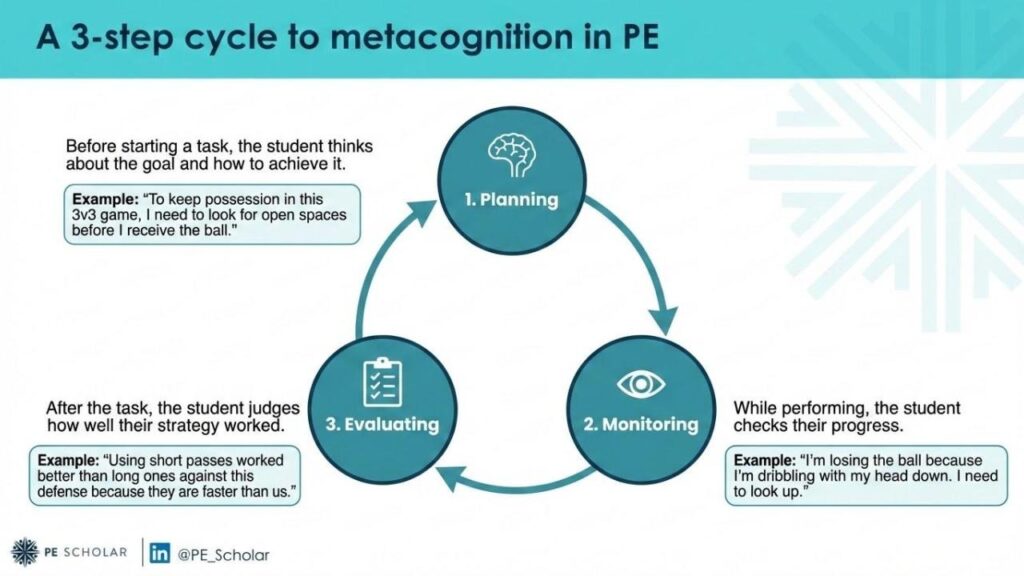
- Practical Lever: Instead of just teaching the “how” of a chest pass, challenge students to diagnose why a certain pass failed in a 3v3 situation. This aligns with the report’s emphasis on “nurturing metacognition” and “first-hand experiences”, and technology can also support reflection and metacognition in physical education.
- Action: Reduce the quantity you plan to teach in a lesson but increase the discovery/practice time as well as the time dedicated to all 3 steps of metacognition via guided reflection and discussion
Taking this one step further, Quennerstedt and colleagues suggest we should instead aim for students to be Busier, Happier, and Good(er) across five “Learning Bodies”, and this starts in the early years where fundamental movement skills are best developed between ages three and eight: locomotor, stability, and manipulation skills provide the building blocks and a strong foundation for more complex movement and the next stage of sport and physical activity, yet younger pupils in England are often not competent in these basics.
- The Moving Body: Developing motor competence
- The Thinking Body: Engaging in metacognition and tactical decision-making
- The Social Body: Navigating teamwork and interaction
- The Emotional Body: Developing resilience and self-regulation
- The Cultural Body: Understanding the place of movement in our wider world
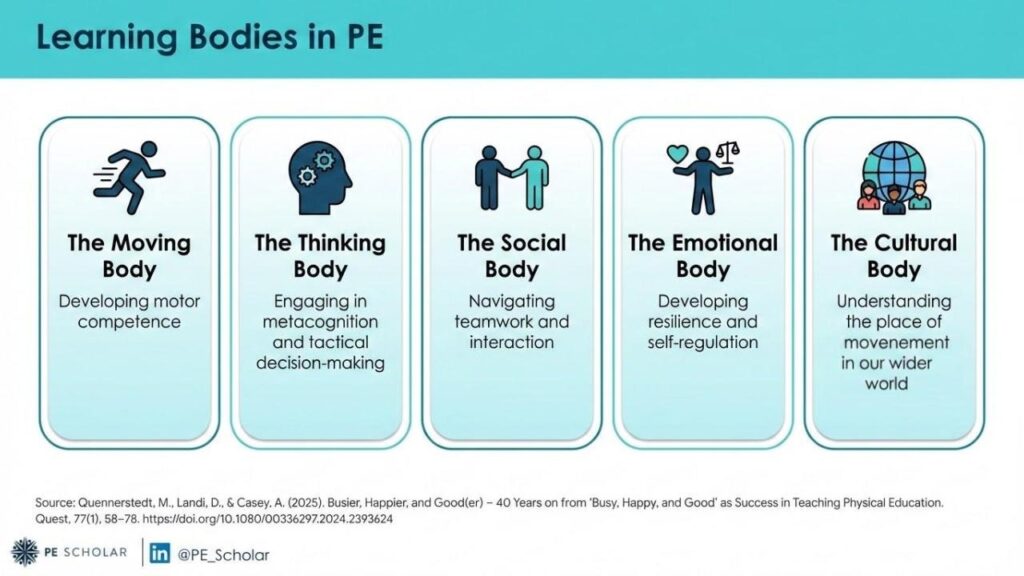
The Bigger PE Shift: High-quality PE is not just about “doing” (physical activity) and unlike other subjects where the norm is to focus on “knowledge rich”, great PE is about influencing feelings, habits and values and consequently concerning ourselves with supporting our students in “becoming” (learning and capacity) and human “flourishing” (living optimally and thriving through their movement experiences). Revisiting important knowledge regularly helps pupils connect movement, thinking and feeling over time.
2. Crafting High Quality PE Subject Content: The PCK Challenge
One of the report’s pillars for success is “Quality Subject Content.” For PE teachers, this translates to Pedagogical Content Knowledge (PCK) which requires the ability to take complex movement concepts and make them accessible without stripping away the challenge. In PE, we often mistake high-intensity physical activity for high-quality content. However, a massive meta-analysis by Dudley et al. (2022) revealed a startling truth: Physical activity alone (quantity-based PE) is the weakest strategy for cognitive development.
To impact the “Thinking Body” and executive functions (like inhibitory control and cognitive flexibility), the evidence points toward Games-Based Approaches. Consequently, using a wider variety of pedagogical models has a significantly higher “hinge point” of effectiveness for cognitive and psychomotor outcomes compared to traditional drills.
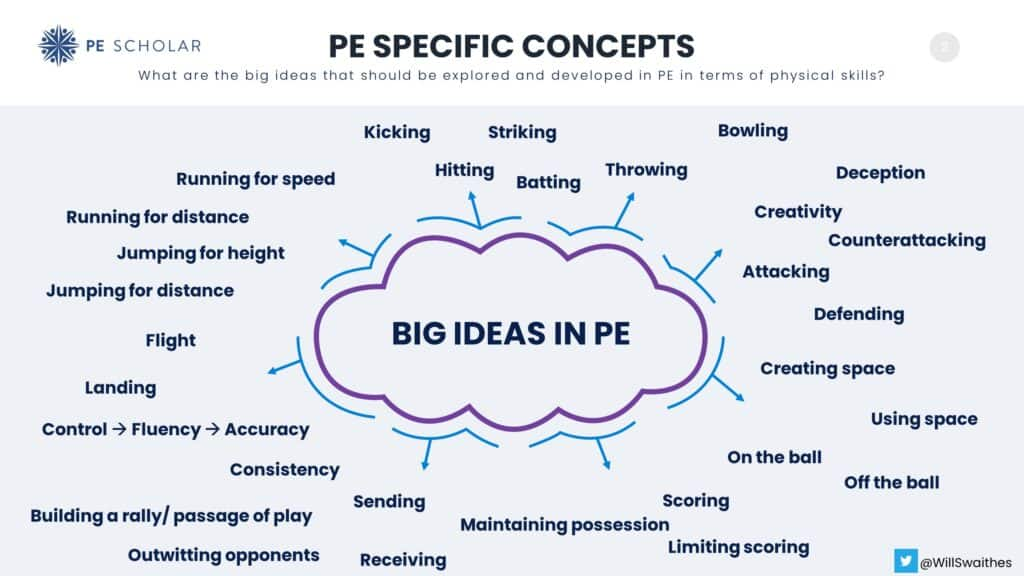
The PE Shift: The report warns against fragmented content. In PE, this means moving away from isolated skill-drill and technique focussed lessons toward a more holistic outlook, for example a Concept-Based Curriculum.
- Practical Lever: Rather than a “Football Unit,” focus on a “Spatial Awareness Unit” where the ball is simply the tool to understand the broader concept of invading space
- Action: Consider some of the big ideas captured in this Threshold Concepts in PE book review and experiment with creating a unit of work focused on one of them rather than a traditional activity area and see what impact it has on creativity in lesson design, student engagement and “stickability” of learning that is transferable to other contexts
3. Providing Social-Emotional Support: The Gym as a Brave Space
The OECD identifies social-emotional support as a core goal. Because PE involves public performance and potential embarrassment, our “classroom” environment is higher stakes than a traditional one and that means we need to work twice as hard on creating a climate with real psychological safety for all. As Scott Kretchmar (2006) famously argued, quality PE should provide students with “Ten More Reasons” to move. These reasons go well beyond health or weight loss and, from a salutogenic perspective, we must remember to view health not as the absence of disease, but as a continuum of wellness and consequently focus student attention on what helps them thrive right now!
Kretchmar suggests that movement should feel like a “home” rather than a tool. This means finding the “Aha!” moment in a skill and fostering the “playground culture” where students feel a sense of belonging, intrinsic joy and opportunity to explore.
The PE Shift: We must move from extrinsic justifications (moving to get fit) to intrinsic meanings (moving because it is a joyous expression of who I am). This is the Meaningful PE framework in action and requires a careful balance of teacher and student agency.
- Practical Lever: Utilise models like Teaching Personal and Social Responsibility (TPSR) or Sport Education and allow students to lead warm-ups or negotiate rules for a modified game. This builds the “equitable environment of interaction” that the report advocates for
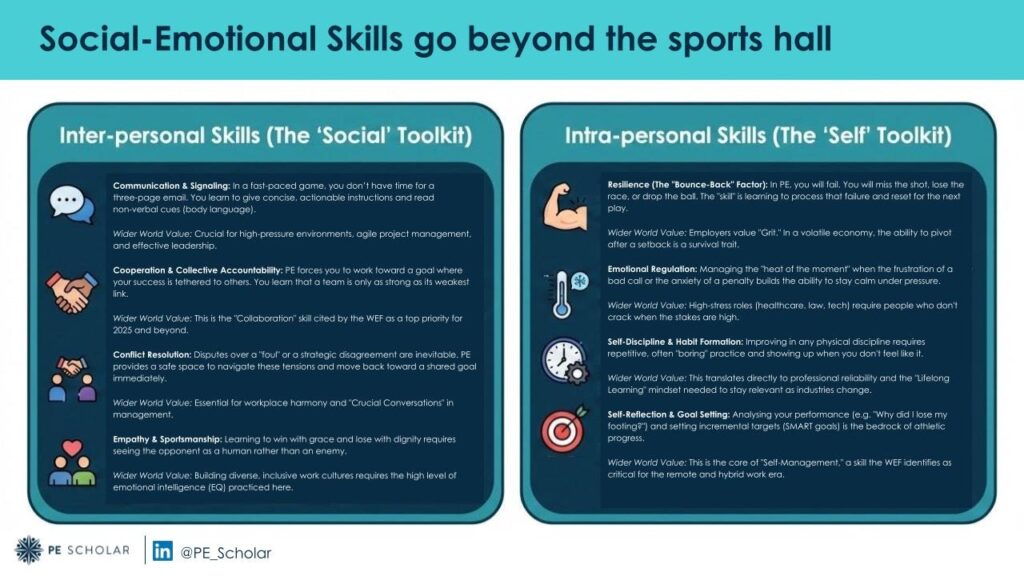
- Action: Why not challenge your team to read this and download the one-page summary then all experiment with a TPSR approach to your next unit of work to get in the learning pit together and discover what works and what doesn’t in your unique context whilst also highlighting to students the inter and intra-personal skills that they get to develop in PE and how relevant they are to life beyond lessons
4. Fostering Classroom Interaction: Teaching Practices and the Power of the Prompt
The report highlights that high-quality interaction is built on questioning and feedback loops. In a loud, open-space gym, whole-class discussion can be difficult, but it is no less vital.
The PE Shift: We must shift from “Direct Instruction” (giving answers) to “Scaffolded Inquiry” and ensure questioning is both powerful and capitalises on cooperative learning to avoid too many lost movement minutes or day-dreaming individuals.
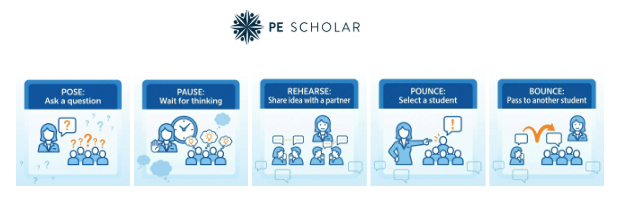
- Practical Lever: Use “Check for Understanding” (CFU) techniques that don’t involve 30 students sitting on a cold floor. Try “thumb-polling” or “quick-fire tactical huddles” where students must articulate a strategy in 15 seconds
- Action: Access our Powerful Questioning prompt sheet, ‘PEdagogy Techniques’ cards or Kagan’s Cooperative Learning Structures for more ideas to hone your pedagogical craft and, again, challenge others in your team to trial ideas collectively
5. Using Formative Assessment: Data in Motion
Perhaps the most significant finding is the importance of Formative Assessment. The OECD report notes that while 79% of teachers provide immediate feedback, far fewer allow students to evaluate their own progress.
The PE Shift: Assessment should be a compass, not a certificate.
- Practical Lever: Use peer-assessment via video analysis (using tablets) or Success Criteria posters. This moves the teacher from being the sole judge of quality to a facilitator of student self-regulation
- Action: Complete our Assessment in PE Bitesize Course and download our Assessment Toolkit for 10 quick wins for everyday teaching to enhance your use of formative assessment and student reflection in PE
Reflection: Breaking the PE Office Silo
A crucial takeaway from the OECD report is that high-quality teaching is not a solitary pursuit. It thrives in a collaborative culture and that is something we are SO passionate about here at PE Scholar.
Too often, PE departments exist in a silo, physically separated from the main school and socially isolated in the PE office. To unlock our teaching quality, we need to:
- Engage in Peer Observation: Not for grading each other, but for collaborative reflection on specific pedagogical practices
- Move beyond “Sport CPD”: Instead of attending a coaching course for a specific sport, seek out CPD on cognitive science or formative assessment and translate it for the field or, better still, join us for one of our Pedagogy in Practice days or our National Head’s of PE Conference where we prioritise the why and the how of PE over the what.
Key Takeaways for the PE Practitioner
- Cognitive > Physical: Always ask, “What are they thinking right now?”
- Concepts > Skills: Build deep understanding through transferable movement concepts
- Feedback > Grades: Focus on the “next step” in learning, not just the level at the end
- Collaboration > Isolation: Get out of the PE office, share your craft with the wider teaching community and engage in collaborative discussions to get you back in the learning pit to discover new and different ways to teach for maximum impact
Further Reading:
- Dudley D, Mackenzie E, Van Bergen P, Cairney J and Barnett L (2022). What Drives Quality Physical Education? A Systematic Review and Meta-Analysis of Learning and Development Effects From Physical Education-Based Interventions. Front. Psychol. 13:799330. doi: 10.3389/fpsyg.2022.799330
- Durden-Myers, E. J., Whitehead, M. E., & Pot, N. (2018). “Physical Literacy and Human Flourishing.” Journal of Teaching in Physical Education.
- Hattie, J. (2009) Visible Learning: A Synthesis of Over 800 Meta-Analyses Relating to Achievement. London: Routledge.
- Kretchmar (2006), Ten More Reasons for Quality Physical Education.
- OECD (2025). Unlocking High-Quality Teaching, OECD Publishing, Paris, https://doi.org/10.1787/f5b82176-en
- Placek, J. (1983). Conceptions of success in teaching: Busy, happy and good. In T. Templin & J. Oslin(Eds.), Teaching in physical education (pp. 46–56). Human Kinetics
- Quennerstedt, M., Landi, D., & Casey, A. (2025). Busier, Happier, and Good(er) – 40 Years on from ‘Busy, Happy, and Good’ as Success in Teaching Physical Education. Quest, 77(1), 58–78. https://doi.org/10.1080/00336297.2024.2393624
- Whitehead, M. (2010). Physical Literacy: Throughout the Life Course.
- Wiliam, D., 2017. Embedding formative assessment: Strategies for Classroom Assessment That Drives Student Engagement and Learning
Responses