



Last week’s insight introduced the concept of neurodiversity and the importance of an inclusive approach to PE teaching so that the variety of learning differences in your class are valued and supported, and all students can thrive. This week’s insight introduces the wide range of inclusive approaches that will accommodate the diverse learning needs and preferences in PE.
Incorporating adaptive teaching strategies into your planning and delivery should ensure that everyone, regardless of neurological differences:
Feels welcome
Supports each other in their learning
Is supported by you
Cooperates well
Is treated equally and their opinions and views are valued
Learns together, can access learning in all lessons and are engaged in all lesson activities
Achieves their learning according to their individual ability.
(Grimes, 2010; Inclusive Teach, 2024)
Where to start
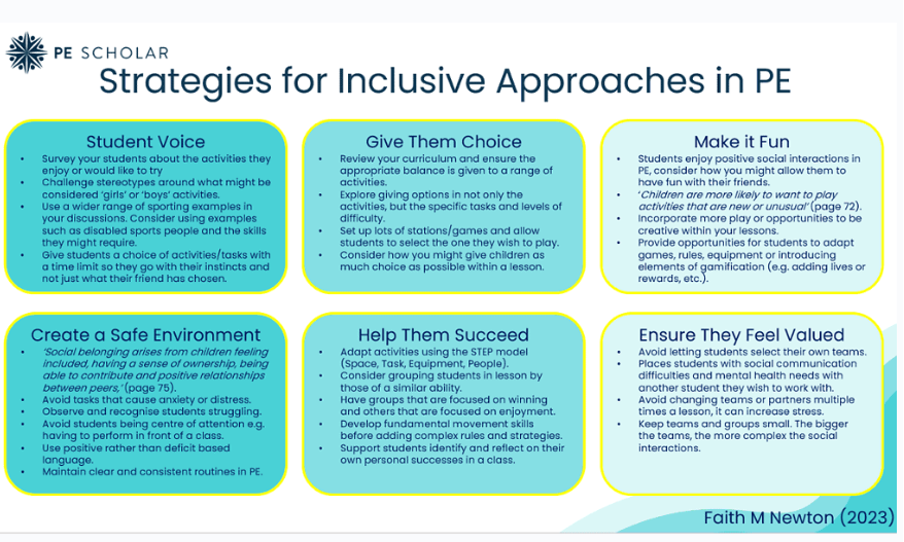
This starts with a focus on social, emotional and academic growth and a shift that celebrates differences as strengths. Strategies are flexible and adaptable in response to the learning preferences of each student. To achieve this, PE teachers might consider:
- student voice
- choice
- fun
- safe and supportive environment
Voice
In PE, student voice plays a pivotal role in creating a more inclusive learning experience. By actively involving students in decision-making processes, teachers can ensure that PE programmes resonate with the interests, preferences, and needs of the diverse student body. To ensure you understand their needs, set aside time talk individually with students to understand any specific preferences. This will help you tailor your approach to best support them. You can also implement ongoing strategies that capture student voice such as:
Structured feedback sessions: Incorporate regular opportunities for students to provide feedback on their PE experiences. This can be done through class discussions, written reflections, or simple surveys with age-appropriate questions.
Visual representation: Use visual aids such as drawings, symbols, thumbs up/down, or emoji-based feedback forms to make it easier for younger students to express their thoughts and feelings about PE activities.
Peer interviews: Encourage students to interview each other about their favourite activities, challenges they face, and suggestions for improvement.
Anonymous surveys: Use online survey tools or paper-based questionnaires to gather anonymous feedback from secondary students about their PE experiences, including their interests, dislikes, and suggestions for improvement.
Focus groups: Organise focus group discussions with small groups of students to delve deeper into specific topics related to PE, such as curriculum content, teaching methods, or extracurricular sports opportunities.
Student Council representation: Include PE representatives on the school student council or committee, providing them with a formal platform to voice their peers’ opinions and advocate for changes or enhancements to the PE programme.
Digital platforms: Use digital platforms such as online forums, social media groups, or dedicated PE apps where students can share ideas, provide feedback, and engage in discussions about their PE experiences.

Choice
In a world that might feel unpredictable and overwhelming, particularly for neurodivergent students, giving choice in their PE lessons provides agency and control over their environment. When they have a say in what they do, students are more likely to engage with the lesson. But most of all, offering choice allows students to participate in a way that suits their individual needs and preferences. The possibilities for varying PE lessons are vast but here are a few examples:
Warm-up activities: Instead of a single warm-up routine, offer a choice board with different exercises like jumping jacks, jumping rope, animal walks, or yoga poses. Students can pick 2-3 exercises to complete for their warm-up.
Skills: Set up stations with different equipment for practising throwing, catching, jumping, or skipping. Students can rotate through the stations at their own pace, focusing on skills they want to improve. While teaching a new skill like dribbling a basketball, offer different learning pathways. Students can choose to learn with a partner, watch a video demonstration, or receive individual instruction from the teacher.
Games: Present two or three different tag or low-organisation games and let the class vote on which one they want to play first. Offer variations on the chosen game to cater to different abilities.
Cool-down activities: Provide a selection of cool-down stretches displayed with pictures or demonstrations. Students can choose stretches that target specific muscle groups or that they find most relaxing.
Reflective learning: After a lesson, provide reflection prompts on cards. Students can choose a prompt that resonates with them, such as “What was the most challenging part of today’s activity?” or “What skill do you want to focus on improving next time?”
Fun
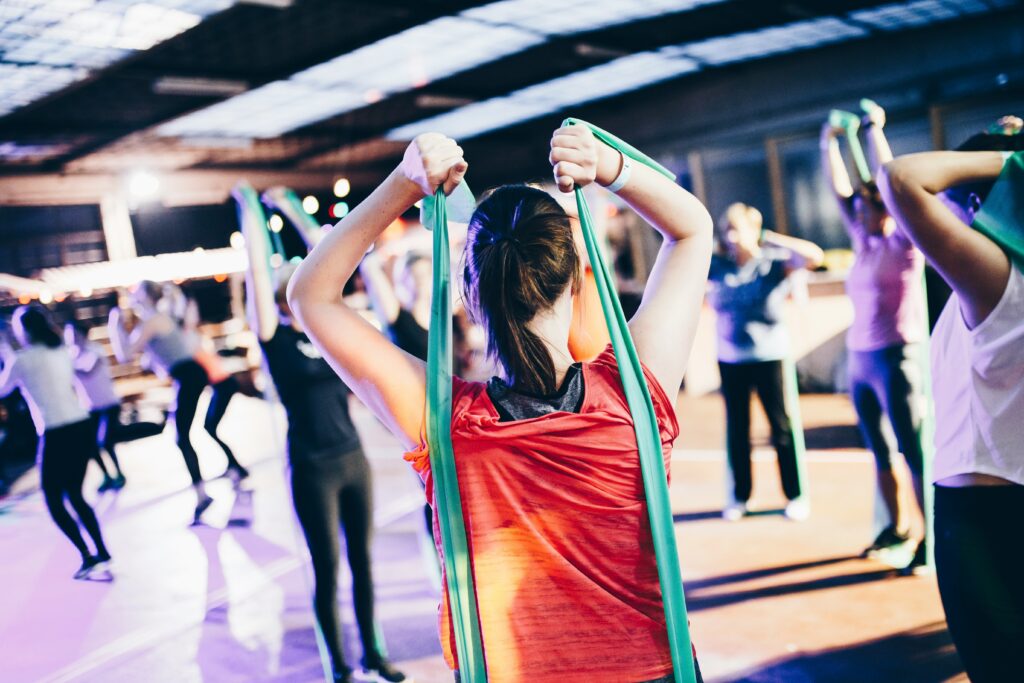
The key to engaging neurodivergent students, particularly those with SpLD, is to use multisensory teaching to make PE lessons more fun and increase learning. Ideas are provided below but when planning your lessons remember that some neurodivergent students have heightened sensory awareness and may become easily overwhelmed, so also provide a choice of quiet activities that are less stimulating.
Themed Activities: Create PE lessons with themes for younger students like “Exploring the Jungle” or “Underwater Adventure.” Use colourful cones, hula hoops, and other equipment to represent different elements of the theme.
Visual Cues: Instead of just giving verbal instructions, use flashcards with pictures or short videos demonstrating the desired movement or skill.
Interactive Games: Project games like follow-the-leader routines onto a wall or screen. Students respond by moving their bodies according to the visual cues.
Musical Movement: Create playlists with different tempos and rhythms. Students can move freely or perform specific movements based on the music’s pace and style.
Sound Effects: Incorporate sound effects during activities. For instance, use a whistle to signal a change in direction during tag games or animal sounds for specific locomotor movements.
Descriptive Narration: While students are performing an activity, provide a descriptive narration of their movements. This can help them visualise the proper technique and improve body awareness.
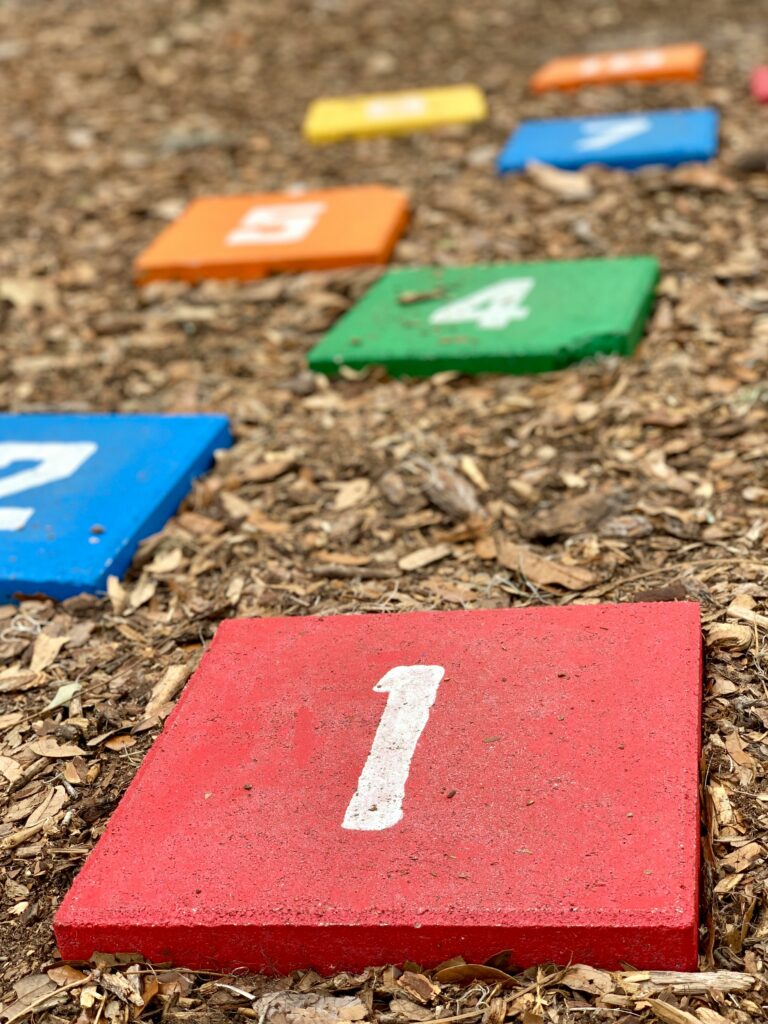
Obstacle Courses: Design obstacle courses that incorporate crawling, jumping, balancing, and climbing elements. This engages the whole body and provides a fun challenge.
Tactile Activities: Set up stations with beanbags, scarves, or textured mats. Students can complete exercises while incorporating these tactile elements, adding a new sensory dimension to movement.
Partner Exercises: Pair students up for activities that involve working together, like mirroring movements or balancing on a wobble board. This promotes kinaesthetic learning through physical interaction.
Safety
Creating a safe PE environment for students is paramount for their well-being, participation, and overall success. Neurodivergent students in particular may experience heightened sensitivity to sensory stimuli, difficulties with social interaction, or challenges with executive functioning, making the PE environment potentially overwhelming or stressful. Therefore, establishing a safe environment involves:
Minimise Sensory Overload: Design the PE space to minimise sensory overload by reducing noise levels, providing quiet areas for breaks, and offering sensory tools or equipment, such as noise-cancelling headphones or fidget toys.
Clear Communication: Using clear, positive and concise language with visual cues to convey instructions and expectations so that students understand tasks and transitions more easily. Avoid saying ‘Don’t’ and focus on what you want them to do.
Establishing Routines: Establish predictable routines and structures within PE sessions provides a sense of security and reduces anxiety for neurodivergent students, allowing them to feel more comfortable and confident in their surroundings. Prepare them for what is next with visual reminders if possible.
Promoting Inclusivity and Acceptance: Foster a culture of inclusivity and acceptance within the PE environment, where differences are celebrated and respected. This helps neurodivergent students feel valued and supported by their peers and you.
Providing Emotional Support: Offer emotional support and encouragement during PE activities to build confidence and resilience, enabling students to overcome challenges and participate more fully in physical activities. Use expressions such as, ‘Can I help you with…?’ or ‘That would be even better if…’ Create a relationship of trust so that students know they can ask for help and not be met with annoyance.
Understand triggers: Angry behaviour or withdrawal can be signs of sensory overload or anxiety. If you can get to the source of anxiety, it may be something easily remedied. Provide time out if needed.

Success
Students build self-esteem and are intrinsically motivated by experiencing success. This should entail celebrating small achievements as well the more obvious. Neurodivergent students may lack self-esteem because of social and academic challenges, and constant comparison to neurotypical standards. Carefully plan incremental steps that will result in positive outcomes.
Skill Development: Break down complex skills into smaller, more manageable steps. For example, if teaching basketball, start with basic dribbling techniques before moving on to shooting or passing. Each session can focus on mastering one aspect of the skill before progressing to the next.
Personal Goals: Encourage students to set their own achievable SMART (specific, measurable, achievable, realistic and timed) goals. Incremental steps involve tracking progress over time and celebrating small victories. Regular review of goals, and reflection on progress and setbacks, helps students identify areas for improvement and adjust their strategies accordingly. Developing ownership of learning helps students feel in control.
Variety in Activities: Introduce a variety of physical activities to keep students engaged and to cater to different interests and abilities. Incremental steps involve gradually increasing the intensity or complexity of activities as students become more proficient.
Individualised support: Provide individualised feedback and support to students based on their specific needs and abilities. Incremental steps might involve modifying exercises or providing additional resources to help struggling students improve gradually.
Peer Support and Collaboration: Foster a supportive environment where students can collaborate and encourage each other. Pairing students with different skill levels can provide opportunities for peer mentoring and learning from one another.
Use every positive opportunity to praise: Look for students’ strengths and help them also to recognise them. Specify what the praise is for and don’t praise unnecessarily. Also, offer quiet, one-to-one praise. Some students might feel embarrassed when praised in front of their class.

Conclusion
This insight has outlined numerous adaptive teaching strategies that you can embed into an inclusive teaching practice. Applying these strategies should assist in addressing the wide range of learning differences in your PE classes. The key takeaways are to:
Listen to your students.
Give them choice.
Create a supportive environment.
Celebrate all students’ strengths and successes
And always remember – it’s the small changes that can make a big difference.
Next in our Neurodiversity Series
Keep a look out for further insights in our neurodiversity series:
Last week’s insight introduced the concept of neurodiversity
Next week’s insight will delve into specific strategies for Autism
This will be followed by further insights on Dyslexia, Dyspraxia/DCD and ADHD.
Read
To read more about adaptive teaching strategies click here
For an inspiring example of enabling student voice through digital technology read here
Resources
Read here for further adaptive teaching considerations
References
Grimes, P., 2010. A quality education for all. A history of the Lao PDR Inclusive Education Project, 1993-2009. Report written for Save the Children Norway. Retrieved from: https://www.eenet.org.uk/resources/docs/A_Quality_Education_For_All_LaoPDR.pdf
Inclusive Teach, 2024. ‘What is Inclusive Education? A Guide for UK Teachers’ Available at: https://inclusiveteach.com/2023/06/29/what-is-inclusive-education-a-guide-for-uk-teachers/ (Accessed: 19 March 2024).
Newton, Faith M. (2023). Inclusive PE for SEND Children, FB3 Publishing. Available at: https://www.pescholar.com/insight/inclusive-pe-for-send-children/
Responses